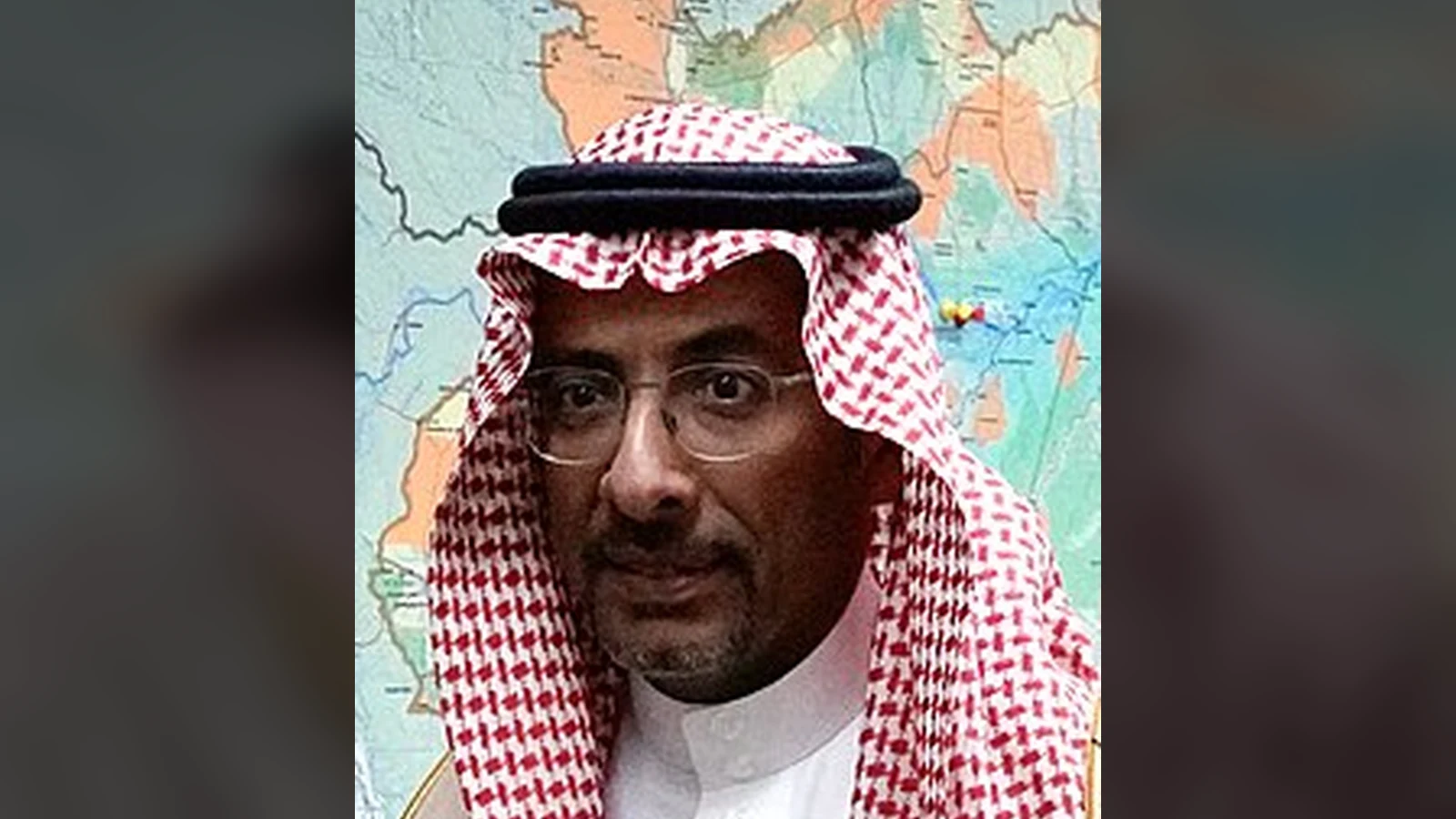
Saudi Arabia’s acting military-industries chief met Türkiye’s defence-industry president in Istanbul as Saudi Arabian Military Industries (SAMI) closed the first supplier day of its RUKN local-content programme. Bandar bin Ibrahim Al-Khorayef and Prof. Haluk Görgün discussed expanding industrial and technical partnerships. No new contract was announced.
Al-Khorayef, who is minister of state, a member of the Council of Ministers, acting governor of the General Authority for Military Industries (GAMI) and vice-chairman of SAMI’s board, reported the sideline meeting on his official account. SABQ, a Saudi daily, said the talks focused on widening industrial and technical cooperation between the two countries. The two-day event ran in Istanbul on 11–12 November 2026. SAMI, a Public Investment Fund company, said it had concluded the first RUKN Supplier Day; the Saudi Press Agency carried the same announcement.
A supplier-matching exercise, not a signing ceremony
SAMI said RUKN organised the gathering with support from Türkiye’s Foreign Economic Relations Board (DEİK), the Saudi–Turkish Business Council and SAHA Istanbul. More than 100 companies took part through leading Turkish industrial groups and their supply chains, the company said, including ASELSAN, HAVELSAN, ROKETSAN and FNSS.
Teams from SAMI Advanced Electronics, SAMI Ammunition, SAMI Alsalam Aerospace, SAMI Land and SAMI Autonomous spent the two days in workshops, round tables and business-to-business meetings, reviewing supplier capabilities against 95 targeted systems and components. The list covered aerospace sustainment, land systems, autonomous and unmanned systems, ammunition, defence electronics and advanced manufacturing.
The Istanbul dates coincide with the Türkiye–Saudi Arabia Defence Industry Days already reported by Defence Mena, including Roketsan chief Murat İkinci’s remarks on joint production and the supply chain. This report deals with the official GAMI–SSB meeting and with SAMI’s own account of RUKN, a localisation track that also featured in Defence Mena’s dossier on Görgün’s work with Arab partners.
Localisation targets and Al-Khorayef’s remarks
SABQ reported that Al-Khorayef told the meeting Saudi Arabia is still building national industrial capacity and trying to attract quality investment into the military industries, in support of Vision 2030’s goal of localising more than 50 percent of military spending by 2030. He linked that effort to existing Saudi–Turkish defence-industry cooperation and to both countries’ G20 membership, and said company-level partnerships were a way to transfer knowledge and technology, train people, and develop manufacturing and maintenance inside the Kingdom.
He said he wanted those relationships to become long-term investments and partnerships that build capacity in Saudi Arabia, serve the home market and eventually reach wider markets. He also pointed to RUKN’s work on supplier development, priority value chains and a larger role for local manufacturers in procurement.
SABQ’s report on the visit said the localisation rate of military spending had risen from 4 percent in 2018 to 27.30 percent by the end of 2025, and that local content in military spending stood at 40.91 percent. The figures were offered as sector background, not as the outcome of a deal signed in Istanbul.
What SAMI says RUKN is for
Eng. Thamer bin Mohammed Al-Muhid, chief executive of the SAMI Group, said in the company’s statement that Saudi–Turkish relations have already created a basis for industrial cooperation. The point of the Istanbul meetings, he said, was to connect SAMI’s companies with qualified suppliers and industrial partners. “Our ambition goes beyond contracts to lasting partnerships that strengthen local manufacturing, develop Saudi suppliers, and enable technology and knowledge transfer in line with Saudi Vision 2030,” he said.
RUKN was launched by Defence Minister Prince Khalid bin Salman, chairman of SAMI’s board, at the 2026 World Defense Show. SAMI says the programme maps critical value chains and strategic dependencies, then works along two routes: raising local production and building local content into procurement, and cutting reliance on external suppliers through a more coordinated national production network.
Exhibition tour and a stop at Baykar
SABQ and Ajel reported that Al-Khorayef toured the accompanying exhibition with Görgün and, during the same visit, went to Baykar, which develops and builds unmanned aircraft, to look at industrial and technical cooperation. No value, quantity or signing was published for that call.
He also met executives from several Turkish companies. Officials present at the supplier day included Istanbul Governor Davut Gül, Turkish Deputy Minister of Industry and Technology Dr Çetin Ali Dönmez, Hashim Songur, the Turkish chair of the Turkish–Saudi Business Council, Al-Muhid, and Murat İkinci, vice-chairman of SAHA Istanbul.
Taken together, the official accounts describe a structured supplier day and a high-level meeting, not a completed sale. No procurement contract, joint-production agreement or memorandum of understanding was reported as having been signed at the close of the Istanbul event.