


South Africa Shifts R560m to Cover SANDF Veterans’ Medical Fund Shortfall



South Africa’s Treasury has confirmed R823 million to cover the South African National Defence Force’s domestic anti-crime deployment, Operation Prosper, and shifted R560 million in unspent funds from other departments to shore up a veterans’ medical scheme, as the Defence budget’s modest increase turns out to be largely reimbursement rather than fresh capability funding.
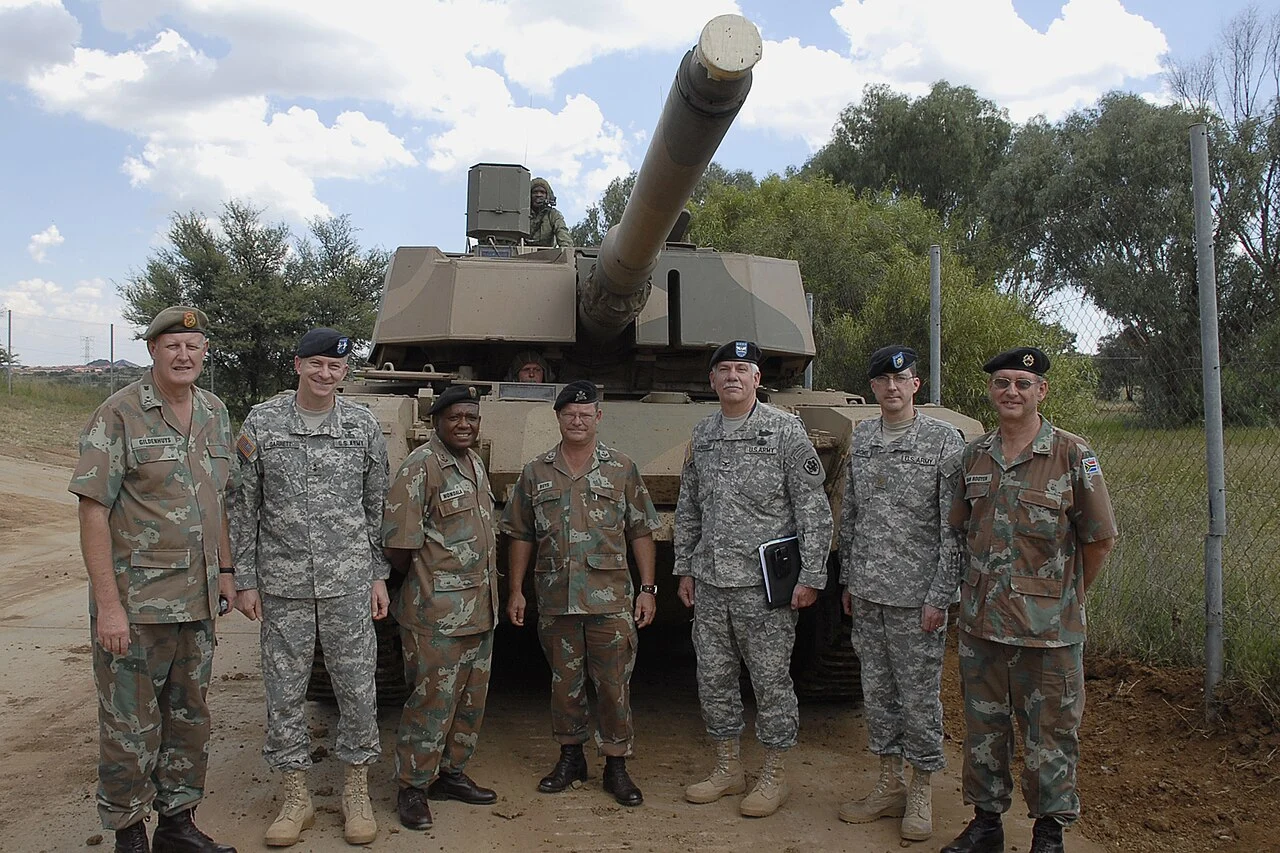
Photo: South African military leaders meet with foreign defence counterparts (file photo, illustrative). Credit: US Army Africa, CC BY 2.0, via Wikimedia Commons
Finance Minister Enoch Godongwana presented the Medium Term Budget Policy Statement (MTBPS) to Parliament on 21 October, and defenceWeb reported that it included R823,153,960 for Operation Prosper, the SANDF deployment President Cyril Ramaphosa announced in his February State of the Nation Address to support police against gangsterism and illegal mining. The operation runs for twelve months and involves more than 2,000 personnel, mostly from the SA Army, across the Eastern Cape, Free State, Gauteng, North West and Western Cape.
Separately, National Treasury is moving R560 million in projected unspent funds from other government departments into the Regular Force Medical Continuation Fund (RFMCF), which covers healthcare and medical claims for former SADF, SANDF and non-statutory force personnel. Lt Gen Malungisa Sitshongaye, the Department of Defence’s Human Resources Division Chief, had briefed Parliament’s defence portfolio committee in September on the fund’s position. The R560 million transfer, according to defenceWeb, ends speculation that the RFMCF could not pay outstanding medical claims.
A R3.85 billion increase that is mostly reimbursement
South Africa’s defence budget for 2026/27 rose from R57.6 billion to R61.46 billion, an increase of R3.85 billion, or roughly 6.7 percent. Defence analyst Dean Wingrin, quoted by defenceWeb, said most of that increase “isn’t fresh Treasury money.” Instead, it largely reflects refunds for Operation Prosper’s costs, retiree healthcare and exit packages for departing personnel, including R10.1 million for early retirement and voluntary exit departures and R439 million rolled over for financial incentives and medical continuation for those leaving service.
The Department of Defence also draws more than R2 billion a year in reimbursement revenue from the Southern African Development Community (SADC) and the United Nations for South Africa’s deployments in the Democratic Republic of the Congo, under the SAMIDRC mission (Operation Thiba) and the UN’s MONUSCO-linked Operation Mistral. Those reimbursements, alongside the Operation Prosper allocation, make up a significant share of the SANDF’s apparent budget growth without adding new money for equipment or readiness.
Readiness shortfalls persist
defenceWeb reported that the Department of Defence had managed only two maritime coastal patrols by the midpoint of the fiscal year, against an annual target of four, and had logged 2,954 flight hours against a target of 12,000, shortfalls the department attributes to maintenance backlogs and parts delays. Wingrin’s assessment is that the Defence budget can only be sustained through further cutbacks, and that South Africa needs to reassess which capabilities it can realistically maintain. Separately, the SANDF has signed an Airbus-Denel partnership aimed at fixing a helicopter maintenance backlog that has similarly constrained SAAF flying hours.
The department has also faced recurring questions about personnel costs: Wingrin warned the DoD will likely overspend on salaries by R3–4 billion again this year, a pattern that has repeated across recent budget cycles and continues to crowd out spending on equipment, maintenance and operational readiness.
Why it matters for Africa
South Africa fields one of the continent’s largest and most industrially capable armed forces, but its defence budget has been squeezed for over a decade by competing domestic priorities, and the SANDF has repeatedly flagged readiness gaps in its navy and air force even as it sustains peacekeeping and anti-crime commitments at home and in the DRC. How Pretoria balances domestic deployments like Operation Prosper against regional commitments and equipment maintenance will shape not only South Africa’s own military readiness but also the capacity it can offer to SADC-led missions, at a time when instability in the eastern DRC continues to test the mission capacity of South Africa and its regional partners.
Sources
- defenceWeb: Godongwana moves R560 million to RFMCF, confirms R823 million Op Prosper allocation
- DefenceMENA: Airbus and Denel Sign Partnership to Fix SAAF Helicopter Maintenance Backlog
- DefenceMENA: South Africa Ordered to End Cuba Military Training Project After Irregular Spending


