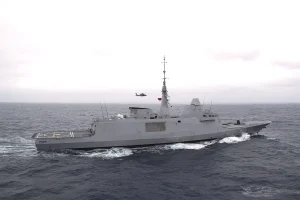
Africa’s Largest Air Forces, Ranked by Combat-Capable Aircraft

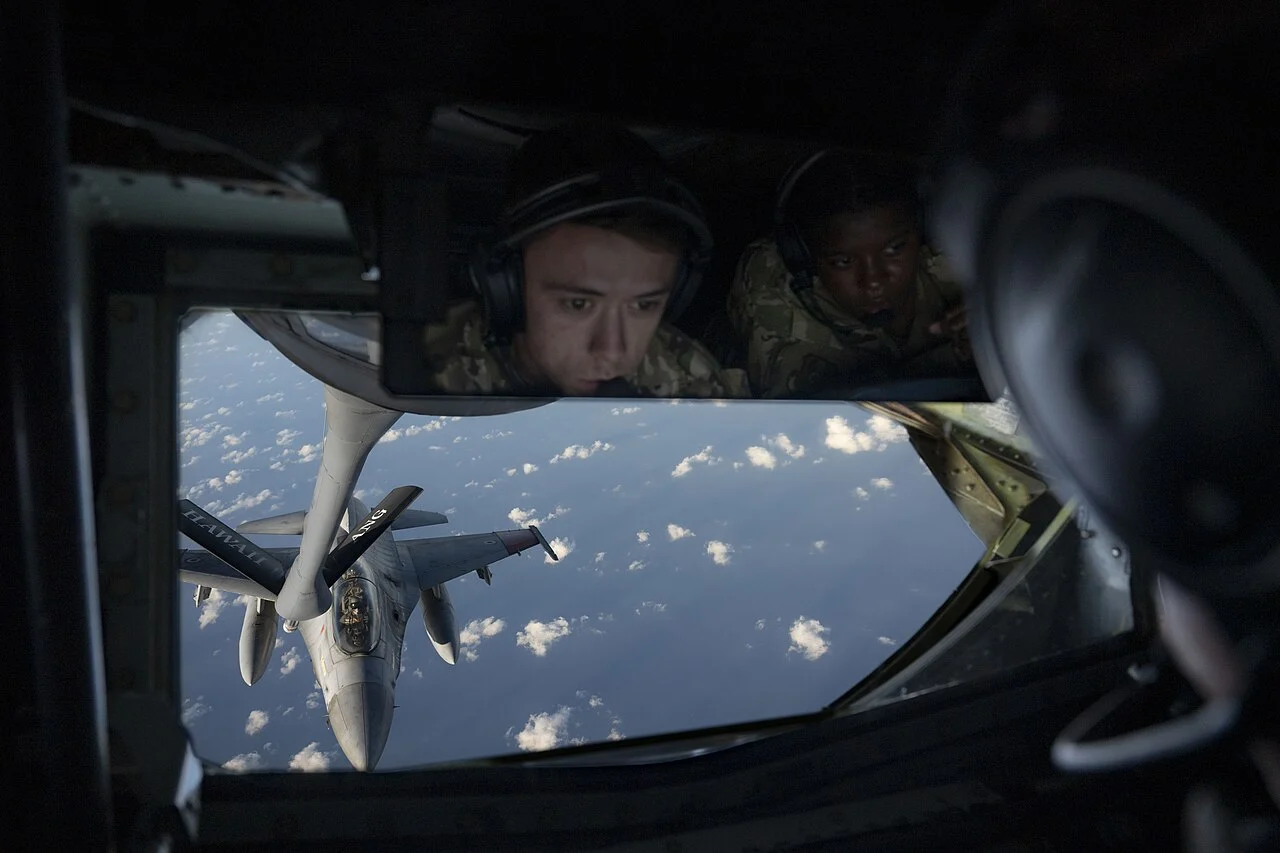


Africa’s air forces are ranked here by combat-capable aircraft in service, the standard measure used by the International Institute for Strategic Studies in The Military Balance. Figures below are drawn from Military Balance data as reported in open analysis published in January 2025, and the list covers the nine African air forces for which a combat-capable count from that source could be verified.
DEFENCE AFRICA | Evergreen ranked list | Data as of January 2025
Combat-capable aircraft counts are the clearest single yardstick for comparing air forces whose fleets otherwise differ enormously in age, origin and mission mix. The metric strips out trainers without a weapons role, transports and most helicopters, leaving fighters, fighter-bombers, dedicated attack aircraft and a handful of light-attack types that can carry ordnance in combat.
On that measure, three countries dominate the continent: Egypt, Algeria and Morocco together field more combat-capable aircraft than the next six ranked air forces combined. The gap below them is wide, and it reflects defence-budget size as much as geography: Gulf-financed and energy-export economies in North Africa field fleets several times the size of air forces in Sub-Saharan Africa, where fast jets are fewer and light attack and counter-insurgency types often substitute for conventional fighters.
How we ranked
Countries are ranked by combat-capable aircraft in service, as reported in The Military Balance (International Institute for Strategic Studies) and cited in a January 2025 University of Waikato analysis of African air power. This is the narrowest and most comparable of the published counts: it excludes transports, most helicopters and unarmed trainers. Other widely cited rankings, such as those built on the Global Firepower index, count all military aircraft including helicopters, transports and trainers, which is why those lists show far larger totals for the same countries (Global Firepower-based reporting puts Egypt’s total military aircraft at 1,093 and Algeria’s at 608, for example). Published figures vary for this reason, not because the underlying fleets are in dispute; this list uses the combat-capable criterion throughout and does not mix it with all-aircraft totals. The source does not specify an exact publication year for each individual country figure beyond “2024/2025,” so all nine entries are dated January 2025 for consistency. Countries without a verifiable combat-capable figure from this source are excluded rather than estimated.
Key facts
- Egypt’s 491 combat-capable aircraft make it Africa’s largest air force by a wide margin (IISS Military Balance, cited January 2025).
- Egypt, Algeria and Morocco combined field more combat-capable aircraft than the next six ranked air forces together.
- Algeria is the only African air force known to have ordered the Russian Su-57 stealth fighter, confirmed February 2025.
- Sudan’s figure predates the civil war that began in April 2023; its current operational count is unverified due to conflict losses.
- Four of the nine ranked air forces (Nigeria, Kenya, Angola, Ethiopia) field 61 or fewer combat-capable aircraft.
1. Egypt — 491 combat-capable aircraft
Egypt’s Air Force is Africa’s largest by a wide margin, with 491 combat-capable aircraft recorded in The Military Balance (IISS, cited January 2025). The fleet’s backbone is a large F-16 Fighting Falcon fleet built up across multiple US Foreign Military Sales tranches since the 1980s, supplemented by Dassault Rafale (54 aircraft, delivered and operational across three contracts since 2015, per DefenceMENA’s Rafale programme tracker) and Mikoyan MiG-29M/M2 (46 aircraft, delivered and operational, contracted 2015). Cairo has reportedly requested 24 more Rafales from Dassault, which would take the fleet to 78 jets; this request remains reportedly under negotiation, with no contract signed as of September 2026, according to French reporting. The scale of Egypt’s fleet reflects decades of diversified sourcing from the United States, France and Russia, a hedging strategy few African air forces can match financially.
2. Algeria — 183 combat-capable aircraft
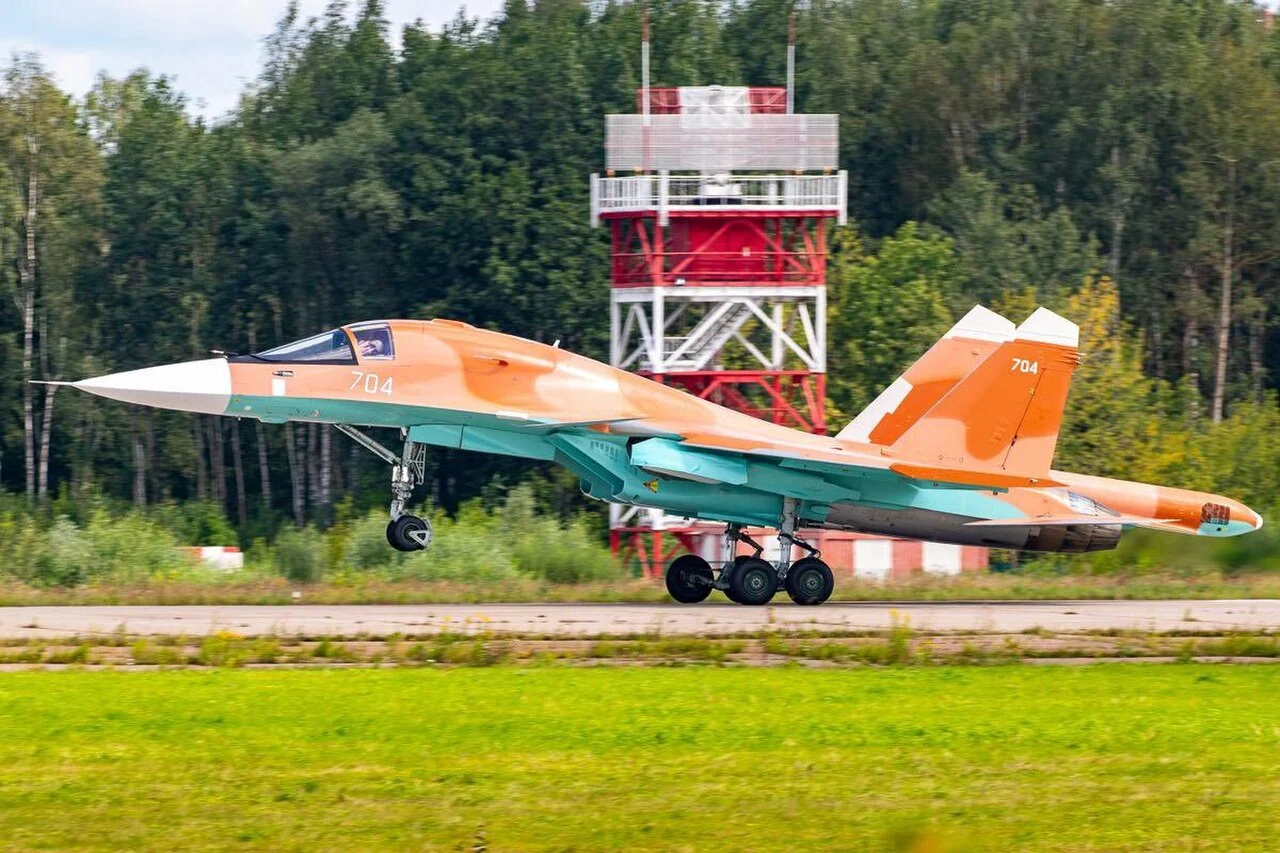
Algeria holds the continent’s second-largest combat-capable fleet at 183 aircraft (IISS Military Balance, cited January 2025), built around the Su-30MKA multirole fighter, more than 60 of which are delivered and operational (see DefenceMENA’s Su-30MKA fleet profile), alongside a Su-34 fighter-bomber squadron delivered and operational since 2023. Algeria became the first confirmed export customer for Russia’s Su-57 stealth fighter, with the purchase acknowledged in February 2025; Russian officials confirmed in November 2025 that at least two aircraft had been delivered to an unnamed foreign customer widely reported to be Algeria, though the full order size and delivery schedule remain reportedly under negotiation and unconfirmed. Algeria’s legacy MiG-29 and MiG-25 fleets are being progressively retired as the Su-30MKA and Su-34 take on more of the air-to-air and strike role.
3. Morocco — 89 combat-capable aircraft
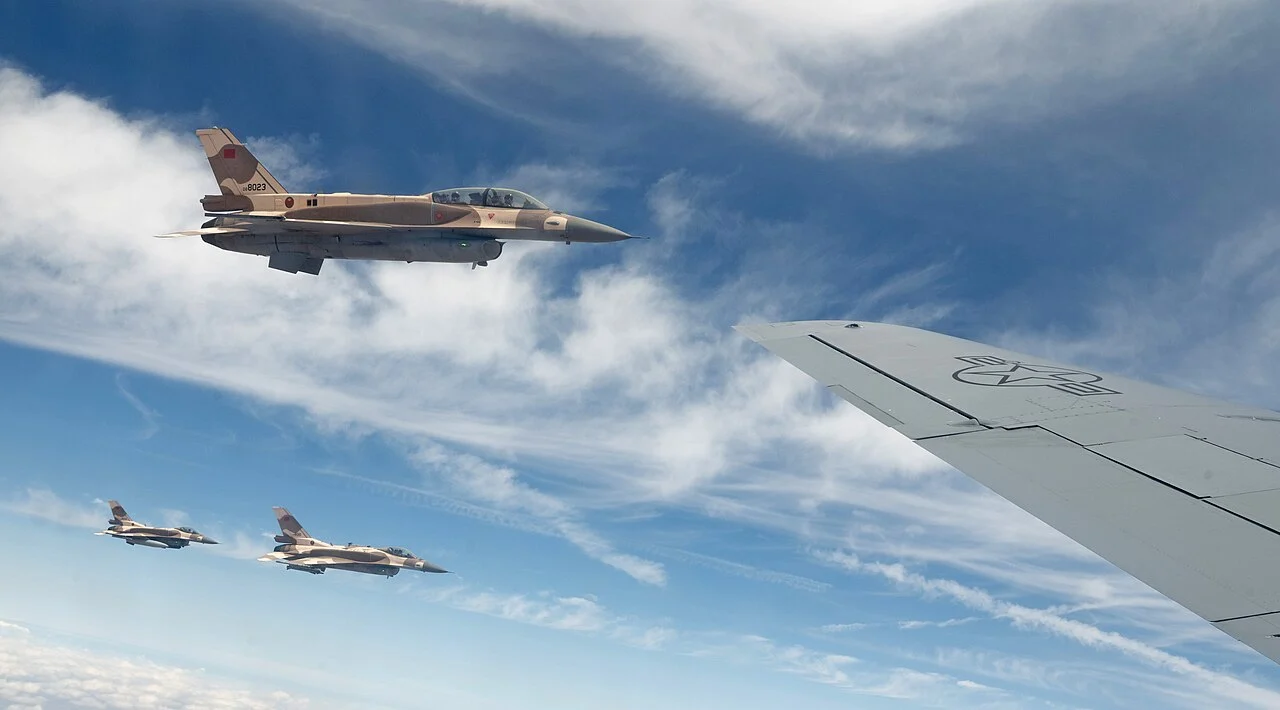
Morocco’s 89 combat-capable aircraft (IISS Military Balance, cited January 2025) currently mix F-16C/D Block 52 multirole fighters, delivered and operational since 2011, with modernized Mirage F1CH jets and an ageing F-5 fleet nearing retirement. Rabat selected the F-16 Block 72 Viper under a US Foreign Military Sales case notified in 2019; the order is contracted, with deliveries pending as of late 2026. The transition from the F-5 and older Mirage variants to the Block 72 standard is tracked in detail in DefenceMENA’s F-5-to-F-16 Block 72 comparison. Morocco’s combat aircraft count is modest next to Algeria’s, but Rabat has prioritized sensor and weapons modernization on a smaller fleet rather than matching Algiers aircraft-for-aircraft.
4. Nigeria — 61 combat-capable aircraft
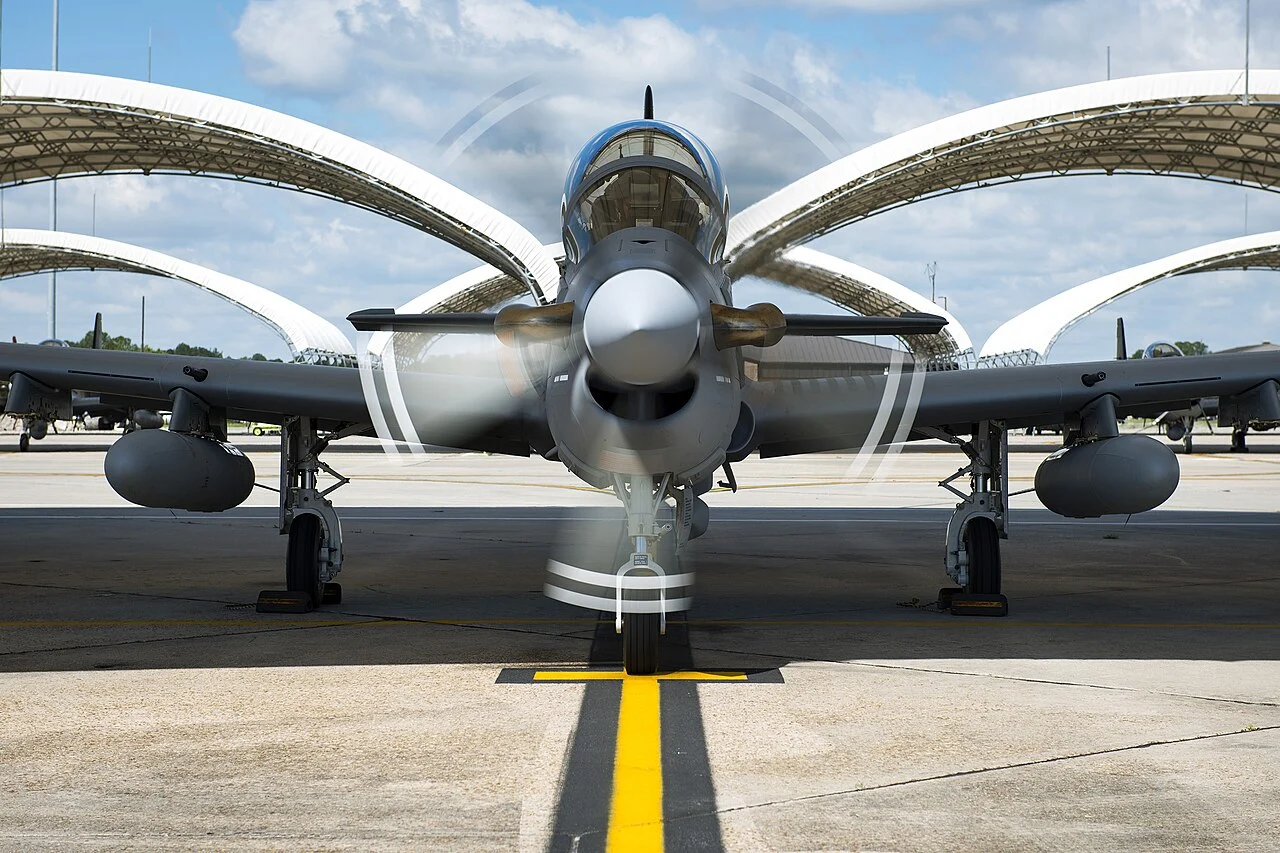
Nigeria’s 61 combat-capable aircraft (IISS Military Balance, cited January 2025) make it the largest Sub-Saharan African air force by this metric, reflecting more than a decade of counter-insurgency operations against Boko Haram and allied groups in the northeast. The fleet mixes JF-17 Thunder multirole fighters (delivered and operational, first jets arrived 2021), Alpha Jet light attack aircraft (operational, in continuous service since the 1980s) and A-29 Super Tucano light attack turboprops (delivered and operational since 2021, after Nigerian pilots trained at Moody Air Force Base in the United States). Unlike the North African air forces above it, Nigeria’s fleet is built almost entirely around counter-insurgency and close air support rather than air defence or deep strike.
5. South Africa — 48 combat-capable aircraft
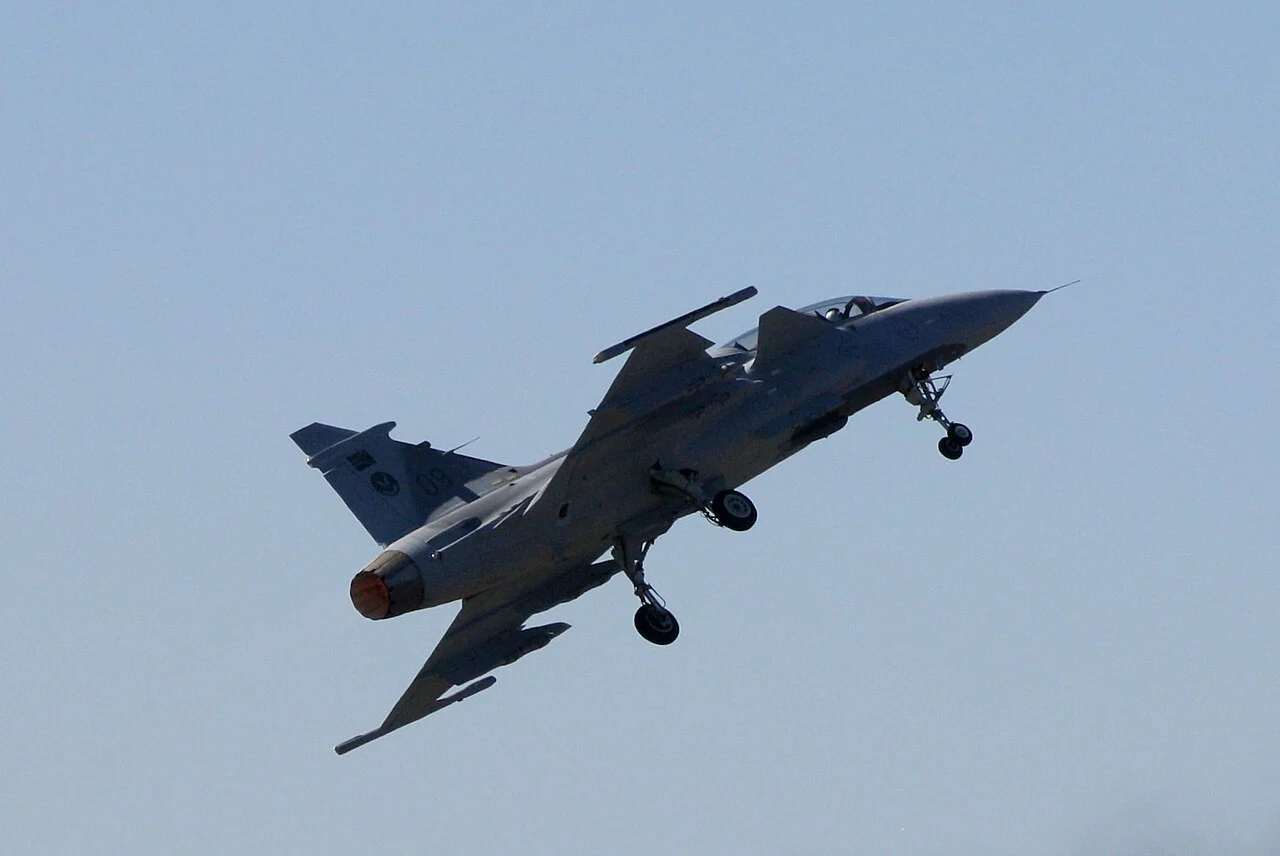
South Africa’s 48 combat-capable aircraft (IISS Military Balance, cited January 2025) are built around the Saab JAS 39 Gripen C/D, 26 of which were delivered and are nominally operational, though South African defence reporting has repeatedly flagged that budget constraints keep only a fraction flying at any time. Hawk Mk120 lead-in fighter trainers, delivered and operational since 2005, round out the fast-jet fleet and provide a secondary light-attack capability. South Africa’s figure sits well below its defence-industrial profile would suggest: Denel and other local manufacturers export widely across the continent (see DefenceMENA’s ranking of Africa’s strongest militaries), but the air force’s own fast-jet fleet has shrunk since the Gripen entered service, a case repeatedly cited in South African parliamentary defence reviews as a readiness concern rather than a procurement failure.
6. Sudan — 45 combat-capable aircraft
Sudan’s 45 combat-capable aircraft (IISS Military Balance, cited January 2025) predate the civil war between the Sudanese Armed Forces and the Rapid Support Forces that began in April 2023. The pre-war fleet included Mikoyan MiG-29 fighters (delivered and operational from 2003-04) and Sukhoi Su-24 and Su-25 strike aircraft operating from Wadi Sayyidna air base near Khartoum. Open-source reporting on Sudanese military facilities since 2023 has recorded fighting around and claimed control of air bases by both sides at various points, but neither verified loss figures nor a current serviceable total has been confirmed by an authoritative source; this entry therefore reflects the pre-war baseline only, not a current operational count. Readers should treat the 45 figure as historical rather than as a description of today’s Sudanese Air Force.
7. Kenya — 32 combat-capable aircraft
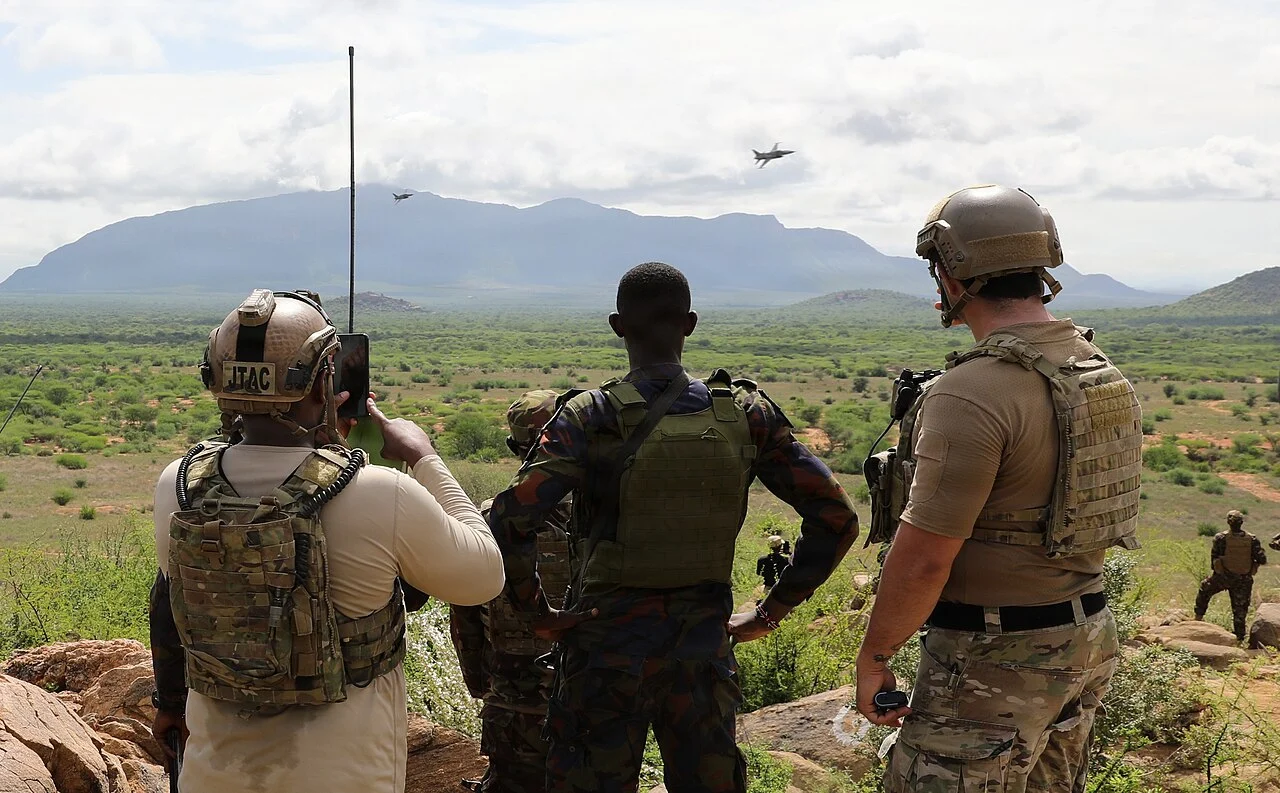
Kenya’s 32 combat-capable aircraft (IISS Military Balance, cited January 2025) are led by the Northrop F-5E/F Tiger II, an airframe design dating to the 1970s that remains operational through periodic overhaul rather than new-build replacement. Kenya has not publicly confirmed a fast-jet replacement programme; its air power contribution to regional counter-terrorism operations, including repeated appearances at the US-led Justified Accord exercise series, leans heavily on close air support and joint terminal attack controller integration rather than high-end strike. Kenya’s position in this ranking illustrates a broader pattern among East African air forces: legacy Western-sourced fighters kept flying well past their original service-life assumptions, rather than large-scale recapitalization.
8. Angola — 28 combat-capable aircraft
Angola’s 28 combat-capable aircraft (IISS Military Balance, cited January 2025) are concentrated in the Su-30K multirole fighter, 12 of which (ex-Indian Air Force airframes overhauled in Belarus) were delivered and became operational between 2017 and 2019, reportedly serving with the 25th Fighter Aviation Regiment at Kuito alongside roughly six Su-27 air superiority fighters, according to defenceWeb reporting. Older MiG-23, Su-22 and Su-25 airframes are reported largely stored rather than active, with defenceWeb’s 2025 profile of the force noting that ageing and inconsistent maintenance leave a significant share of the total fleet non-operational at any given time. Angola’s naval modernization, including new corvettes from the UAE, has drawn more recent attention than its air force, but the Su-30K fleet remains the most capable fast-jet type currently in Sub-Saharan African service outside Nigeria.
9. Ethiopia — 14 combat-capable aircraft
Ethiopia closes this ranking with 14 combat-capable aircraft (IISS Military Balance, cited January 2025), the smallest fleet among the nine countries with a verifiable figure. The Ethiopian Air Force’s fast-jet component centres on the Sukhoi Su-27, delivered and operational since the early 2000s; a fuller account of the fleet’s post-war evolution, including Soviet-era MiG-21 and MiG-23 heritage types now retired, is covered in DefenceMENA’s Ethiopian Air Force inventory profile. Reports of interest in acquiring additional Su-30-family aircraft have circulated periodically but remain reportedly under negotiation, with no confirmed contract as of late 2026. Ethiopia’s low combat-aircraft count reflects a force structure historically weighted toward ground forces and helicopters rather than fixed-wing airpower, a pattern shared with several other landlocked and conflict-affected African states.
| Rank | Air force | Combat-capable aircraft | Source / year |
|---|---|---|---|
| 1 | Egypt | 491 | IISS Military Balance, cited Jan. 2025 |
| 2 | Algeria | 183 | IISS Military Balance, cited Jan. 2025 |
| 3 | Morocco | 89 | IISS Military Balance, cited Jan. 2025 |
| 4 | Nigeria | 61 | IISS Military Balance, cited Jan. 2025 |
| 5 | South Africa | 48 | IISS Military Balance, cited Jan. 2025 |
| 6 | Sudan | 45 (pre-war baseline) | IISS Military Balance, cited Jan. 2025 |
| 7 | Kenya | 32 | IISS Military Balance, cited Jan. 2025 |
| 8 | Angola | 28 | IISS Military Balance, cited Jan. 2025 |
| 9 | Ethiopia | 14 | IISS Military Balance, cited Jan. 2025 |
Why it matters for Africa
Combat-aircraft counts are a blunt instrument, but they expose a real structural divide in African airpower: North Africa’s three largest fleets outnumber the rest of the continent’s ranked air forces combined, a gap rooted in defence-budget size, access to multiple foreign suppliers and, in Algeria’s case, hydrocarbon revenue that supports high-end acquisitions like the Su-57. For most Sub-Saharan air forces, the more relevant story is sustainment rather than fleet size: Nigeria and Kenya have built effective counter-insurgency capability around light-attack turboprops and ageing fast jets rather than numbers, while Angola’s and South Africa’s larger nominal fleets are constrained by serviceability and maintenance funding rather than aircraft on the books. Technology transfer and local assembly remain limited to a handful of states; for most of the continent, air power still depends on which supplier relationship a country can sustain financially over decades, not which aircraft it can order in a single contract.
Sources
- University of Waikato, “West Africa Is the World’s New Epicentre for Terrorism” (January 2025), citing The Military Balance (IISS)
- ADF Magazine, “Report Ranks African Nations Investing in Air Power” (February 2025)
- Aviation News Eurasia, on Algeria’s Su-57 order (February 2026)
- DefenceMENA, “Egypt’s Rafale Fighter Programme: Three Contracts Tracked”
- DefenceMENA, “Algeria’s Su-30MKA Fleet Explained”
- DefenceMENA, “From F-5 Tiger II to F-16 Block 72: Morocco’s Fighter Transition”
- DefenceMENA, “Ethiopian Air Force Aircraft Inventory (2026)”
- DefenceMENA, Egypt Military Strength profile
- DefenceMENA, Nigeria Military Strength profile