Nigeria’s Armoured Vehicle Fleet Explained

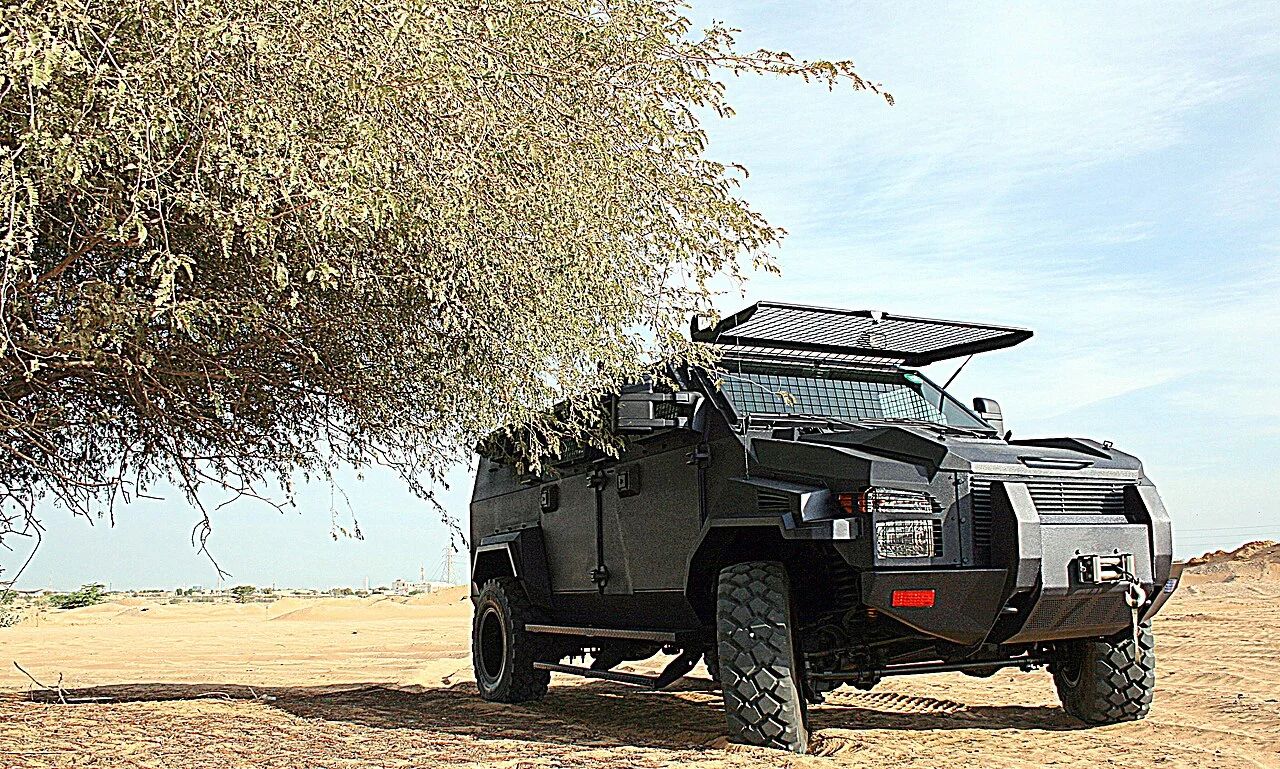


The Nigerian Army fields one of Africa’s largest and most varied armoured vehicle fleets, built from imported MRAPs, Cold War-era hand-me-downs and a growing line of locally produced designs. This gallery identifies the major wheeled armoured systems currently in Nigerian service, with verified quantities and sources where published figures exist, as of October 2026.
DEFENCE AFRICA | Evergreen gallery | Data as of October 2026
Nigeria’s two-decade counter-insurgency campaign against Boko Haram and the Islamic State West Africa Province, combined with communal violence in the Middle Belt and banditry in the North West, has made mine-resistant and ambush-protected (MRAP) vehicles a central procurement priority for the Nigerian Army. Unlike its main battle tank and fighter fleets, which depend almost entirely on foreign suppliers, Nigeria’s wheeled armoured vehicle inventory mixes imports from Canada, China, Ukraine and the United States with a genuinely domestic production base built around the Defence Industries Corporation of Nigeria (DICON) and the private manufacturer Proforce.
That domestic capacity, still modest compared with Nigeria’s overall fleet size, is the most distinctive feature of this category. Proforce’s Ara and Hulk lines and DICON’s Ezugwu and Vanquisher have moved from prototypes to repeat orders since 2018, with Proforce vehicles now also exported to Chad and Mali. This piece covers armoured personnel carriers and MRAPs; main battle tanks are covered separately by DefenceMENA’s Nigeria military profile and by our earlier feature on how many tanks Nigeria operates.
Key facts
- Nigeria received 24 US-donated MRAPs worth $11 million in January 2016 (Army Recognition, 2016)
- Streit Group delivered a cumulative 237 Spartan/Typhoon/Warrior-family APCs between 2017 and 2022 (List of equipment of the Nigerian Army, Wikipedia, citing Nigerian Army sources)
- DICON’s Ezugwu MRAP has reached at least 80 confirmed units since its first order of 28 in November 2019 (OvertDefense, 2019; Ezugwu MRAP, Wikipedia)
- Nigeria placed a follow-on order for the Proforce Hulk alongside Mali at IDEX 2025 in February 2025 (Janes, 2025)
- DICON handed over the first 15 of a reported 20-vehicle Vanquisher light APC batch on 4 March 2026 (AllAfrica; NAN, 2026)
ACTIVE
1. Streit Group Typhoon, Spartan and Warrior family — Canada-designed, delivered 2017-2022
These Canadian-designed 4×4 armoured personnel carriers, manufactured by Streit Group at facilities including Innisfil, Ontario, and assembly sites in the United Arab Emirates, form the backbone of Nigeria’s imported wheeled APC fleet. A first contract covering an initial batch of about 25 vehicles out of a reported 177-vehicle order arrived in mid-2017, according to Army Recognition and StrategyPage, both reporting at the time. The Nigerian Army’s own equipment accounting, as compiled in Wikipedia’s list of Nigerian Army equipment, puts the cumulative total of Spartan, Typhoon and Warrior variants delivered between 2017 and 2022 at 237 — published figures vary between the original 2017 order size and the later cumulative count, which likely reflects follow-on orders after the first batch. Status: delivered. The vehicles carry armament ranging from pintle-mounted machine guns to turreted 12.7mm weapons depending on variant, and have been used extensively in counter-insurgency operations in the North East.
2. US-donated mine-resistant ambush-protected vehicles — delivered 2016
In January 2016, the United States handed over 24 Mine-Resistant Ambush-Protected (MRAP) vehicles to the Nigerian Army’s 9th Brigade at Ikeja Cantonment in Lagos, in a package valued at $11 million, according to a statement from the US Consulate General Lagos reported by Army Recognition. The specific vehicle family was not identified in available reporting, so it is listed here as “not verified” by model; the donation was part of broader US security assistance aimed at supporting operations against Boko Haram in Nigeria’s North East. Status: delivered. The transfer illustrates how Nigeria’s armoured fleet has been built as much through donations and surplus transfers as through direct commercial purchase.
3. DICON Ezugwu MRAP — Nigeria, in service since 2019
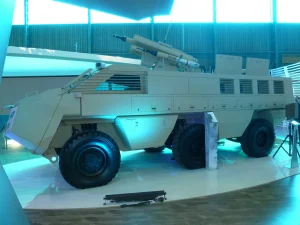
The Ezugwu is Nigeria’s first indigenously designed mine-resistant vehicle, developed by the Defence Industries Corporation of Nigeria together with the Nigerian Army’s Command Engineering Depot. The Nigerian Army ordered an initial batch of 28 Ezugwu vehicles in November 2019, according to OvertDefense, followed by a further order of 52 units in January 2021, per Wikipedia’s dedicated Ezugwu MRAP page — a cumulative total of at least 80 confirmed vehicles. The double-turreted original version mounts a 12.7mm heavy machine gun alongside a 7.62mm light machine gun. Status: delivered. The Ezugwu underpins Nigeria’s push toward local assembly and spare-parts sustainment independent of foreign supply chains, a priority given the operational tempo of North East counter-insurgency operations.
4. Proforce Ara and Ara 2 MRAP — Nigeria, ordered from 2018
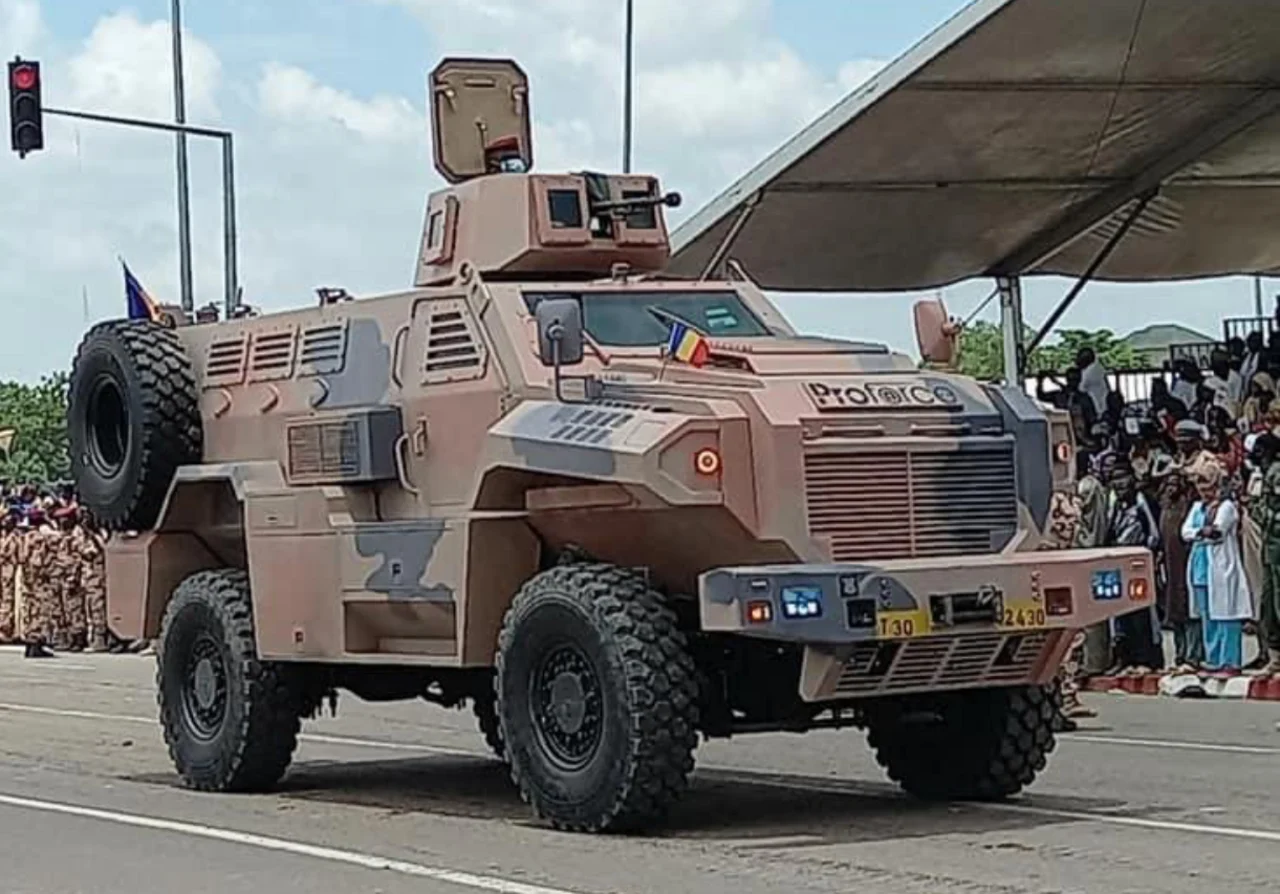
Proforce Limited, a private Nigerian manufacturer based in Ogun State, began production of 30 improved Ara 2 vehicles for the Nigerian Army from late 2018, according to Army Recognition’s 2019 coverage, with Defense.info describing a monocoque, V-shaped hull design carrying up to 12 troops and a turret capable of mounting a 12.7mm machine gun. The design has since been exported: Chad ordered 20 Ara 2 vehicles, with Janes later confirming partial deliveries. Status: delivered (Nigerian Army batch) / exported (Chad). The Ara family demonstrates Nigeria’s growing capacity to both equip its own forces and compete for regional MRAP export contracts, including against Turkish and South African designs active elsewhere on the continent.
5. CS/VP3 “Bigfoot” MRAP — China, delivered in multiple batches since 2015
Manufactured by China’s Poly Technologies, the CS/VP3 “Bigfoot” MRAP has formed a major part of Nigeria’s mine-protected fleet since at least 2014-2015. A 2021 Dubawa fact-check, examining a claim attributed to defenceWeb that Nigeria had acquired 100 additional CS/VP3 vehicles, concluded the confirmed figure for that specific shipment was 60, not 100 — published figures vary depending on which delivery batch and time period is being counted, and Wikipedia’s cumulative equipment list cites deliveries in 2015, 2018 and 2021 plus a further 50 units confirmed by then-Chief of Army Staff Lagbaja in June 2024, for a reported total above 300 across all batches. Status: delivered. The type offers protection rated against buried charges, but several vehicles have been lost to IED strikes during North East operations since 2015, underlining the limits of MRAP protection against large or well-emplaced devices.
6. BTR-3 family (BTR-3UN, BTR-3UK, BTR-3UR, BTR-3E/14.5) — Ukraine
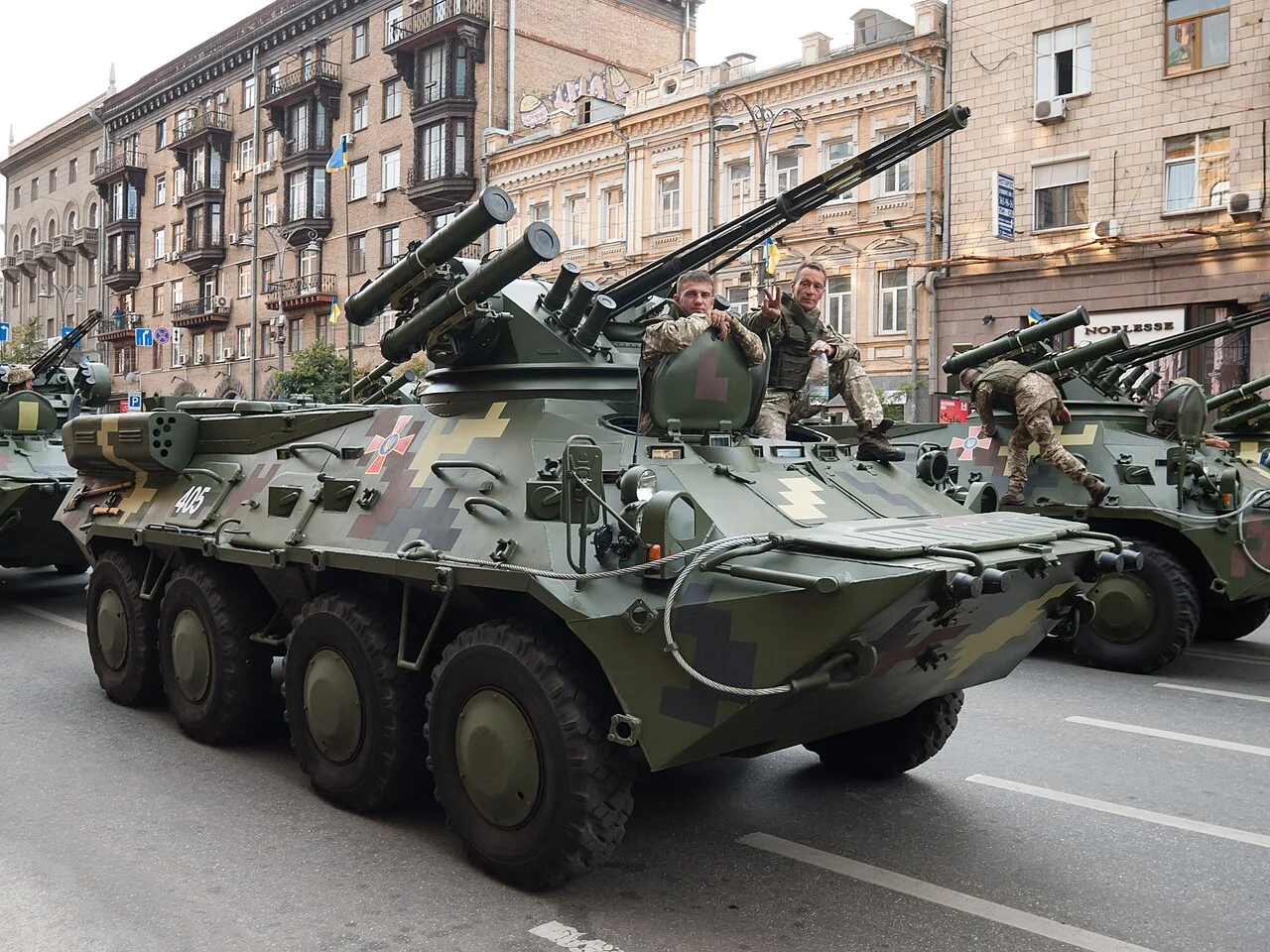
Nigeria is listed as an operator of the Ukrainian-designed BTR-3 wheeled armoured personnel carrier family in the UN Register of Conventional Arms, as cited in Wikipedia’s BTR-3 article (data retrieved December 2020): 30 BTR-3UN, six BTR-3UK, four BTR-3UR and seven BTR-3E/14.5 vehicles, a total of 47. Status: delivered. Exact delivery dates were not available in the sources reviewed, and the figures reflect reporting as of 2020 rather than a current 2026 snapshot — treat the total as a floor rather than a precise current count. The spread of sub-variants suggests Nigeria acquired the type for a mix of roles, from troop transport to fire support, rather than as a single standardised batch.
7. Proforce Hulk — Nigeria, ordered 2025
The PF Hulk, built on a design lineage Proforce describes as derived from the Russian Spartak armoured vehicle, is the newest addition to the company’s protected-vehicle range. Janes reported that Nigeria, alongside Mali, placed orders for the PF Hulk at the IDEX 2025 defence exhibition in Abu Dhabi in February 2025, with production carried out under licence in Nigeria. Wikipedia’s Nigerian Army equipment list separately records the Hulk as a variant within its broader Ezugwu-family MRAP entry. Status: ordered. As with the Ara before it, the Hulk programme reflects Proforce’s strategy of pairing a Nigerian Army anchor order with export sales to other Sahelian and West African militaries facing similar insurgent and banditry threats.
8. DICON Vanquisher light APC — Nigeria, delivered March 2026
The Vanquisher is a light armoured personnel carrier produced by DICON in partnership with Vanquish Industries Limited and the Army’s Command Engineering Depot. The Nigerian Army formally took delivery of the first 15 vehicles in a handover ceremony in Kaduna on 4 March 2026, according to AllAfrica and Nigeria’s News Agency (NAN). Chief of Army Staff Lt. Gen. Waidi Shuaibu, represented at the ceremony by Maj. Gen. Bamidele Alabi, called the handover “a significant milestone in Nigeria’s quest for self-reliance in defence production.” One account describes the 15 delivered vehicles as part of an initial batch of 20; this figure was not independently confirmed in other reporting reviewed, so it should be treated as single-sourced. Status: delivered (15 units); remaining units within the reported batch size are reportedly under negotiation / unconfirmed. The same week, the Army also received Arquus Dagger 4×4 tactical vehicles from France, underlining Nigeria’s parallel-track approach of pairing indigenous production with continued foreign procurement.
| System | Origin | Quantity | Status | Source / year |
|---|---|---|---|---|
| Streit Group Typhoon/Spartan/Warrior | Canada / UAE-assembled | 177-237 (published figures vary) | Delivered 2017-2022 | Army Recognition, StrategyPage 2017; Wikipedia |
| US-donated MRAPs | United States | 24 | Delivered 2016 | Army Recognition 2016 |
| DICON Ezugwu MRAP | Nigeria | 80+ confirmed | Delivered 2019-2021 | OvertDefense 2019; Wikipedia |
| Proforce Ara / Ara 2 | Nigeria | 30 (NA batch); 20 to Chad | Delivered 2018- | Army Recognition 2019; Defense.info 2019 |
| CS/VP3 “Bigfoot” | China | 60-310+ (published figures vary) | Delivered 2015-2024 | Dubawa 2021; Wikipedia |
| BTR-3 family | Ukraine | 47 | Delivered (date unconfirmed) | UN Register of Conventional Arms, via Wikipedia, 2020 |
| Proforce Hulk | Nigeria | Not verified | Ordered 2025 | Janes 2025; Wikipedia |
| DICON Vanquisher | Nigeria | 15 (of a reported 20) | Delivered March 2026 | AllAfrica 2026; NAN 2026 |
No systems in this category are publicly reported as being retired or replaced outright, so the ORDERED, AWAITING DELIVERY, BEING REPLACED and RETIRED groupings are omitted here: Nigeria’s wheeled armoured vehicle fleet is expanding through parallel acquisition and local production rather than one-for-one replacement.
Why it matters for Africa
Nigeria’s armoured vehicle inventory illustrates a broader shift underway across African militaries: the move from pure import dependence toward a mixed model combining donated and commercially imported MRAPs with a domestic industrial base capable of iterative improvement. DICON’s Ezugwu and Vanquisher and Proforce’s Ara and Hulk lines did not emerge in isolation — they followed years of combat experience against IED and ambush threats in the North East, feeding design changes back into local production in a way that imported fleets cannot easily replicate. The willingness of Chad and Mali to order Proforce vehicles also signals that Nigerian designs are becoming commercially competitive within the regional MRAP market historically dominated by Turkish, South African and Chinese manufacturers. For a force still reliant on foreign suppliers for higher-end systems such as tanks and combat aircraft, the armoured personnel carrier and MRAP segment is where Nigeria has made the most tangible progress toward local assembly, sustainment independence and technology transfer, even as reporting gaps and conflicting delivery figures show how much of this progress remains difficult to verify from open sources.
Sources
- List of equipment of the Nigerian Army, Wikipedia
- Ezugwu MRAP, Wikipedia
- BTR-3, Wikipedia (citing UN Register of Conventional Arms)
- Nigerian Armed Forces Purchased 28 Local Ezugwu Armored Vehicles, OvertDefense (2019)
- Nigeria Streit Group Typhoon Spartan 4×4 APC armoured, Army Recognition (2017)
- Armor: Nigeria Has A Maintenance Problem, StrategyPage (2017)
- United States donate 24 MRAP vehicles to Nigerian Army, Army Recognition (2016)
- Increasing success for Nigerian Proforce Ara 2 MRAP, Army Recognition (2019)
- Nigeria Develops Upgraded MRAP, Defense.info (2019)
- China delivered 60, not 100, armoured vehicles to Nigeria, Dubawa (2021)
- IDEX 2025: Proforce receives orders for PF Hulk from Mali and Nigeria, Janes (2025)
- Nigerian Army Receives 15 Locally Made Armoured Vehicles, AllAfrica (2026)
- Army takes delivery of 15 locally produced armoured vehicles, NAN (2026)