Ghana’s parliament approved two aircraft contracts in December 2025 covering four Airbus helicopters and one Dassault Falcon 6X jet, the country’s largest Air Force fleet-replacement move in over a decade. This tracker follows the programme’s timeline, delivery status and the industrial terms disclosed so far, as of October 2026.
DEFENCE AFRICA | Programme tracker | Data as of October 2026
The Ghana Air Force (GAF) has flown an ageing mixed fleet built around Chinese-made Harbin Z-9EH utility helicopters, Russian-made Mi-17/171 transport helicopters and a single Dassault Falcon 900EX business jet for VIP and long-range transport. On 6 August 2025, a GAF Z-9 helicopter crashed near Obuasi in the Ashanti Region shortly after departing Accra, killing all eight people on board, including Defence Minister Dr Edward Omane Boamah and Environment, Science and Technology Minister Dr Ibrahim Murtala Muhammed, according to the Ghana Armed Forces and reporting by Arab News and WSLS. The cause of that crash has not been publicly established, and no finding has linked it to the subsequent procurement decision; but the loss sharpened an existing debate in Accra over the condition and cost of maintaining the Air Force’s oldest airframes.
On 3 December 2025, Parliament’s Defence and Interior Committee, chaired by MP James Agalga, approved two contract agreements: one with Airbus Helicopters SAS of France for one H160 and three H175 helicopters, valued at €125.97 million, and one with Dassault Aviation of France for one Falcon 6X long-range jet, valued at $60.68 million, according to Graphic Online and Rainbow Radio. Agalga told Parliament the package’s projected lifecycle cost over 15 years would run 30 to 40 percent below the cost of continuing to operate and maintain the existing ageing aircraft. The purchases are financed entirely from the government budget over four years, with an initial €62.5 million paid in December 2025 and further instalments due in May 2026, March 2027 and December 2028.
The decision was not uncontested. Former Defence Minister and opposition MP Dominic Nitiwul questioned the government’s consistency in approving the purchase after reportedly rejecting similar requests over the preceding five years, according to Citi Newsroom. Acting Defence Minister and Finance Minister Dr Cassiel Ato Forson defended the acquisitions as necessary because of the ageing fleet and high maintenance demands. The first aircraft, an H175, was delivered on 5 March 2026, arriving in Accra after a ferry flight from Airbus’s Marignane facility in France via Spain and along the West African coast, per the Ghana News Agency and the Ghana Air Force.
The new aircraft will sit alongside the GAF’s existing tactical and transport fleet, and the financing structure mirrors a wider pattern across tight African defence budgets funding capital purchases in instalments rather than through a single appropriation.
Key facts
- Two contracts approved by Parliament’s Defence and Interior Committee, 3 December 2025 (Graphic Online, 2025)
- Airbus Helicopters SAS package: one H160 and three H175, valued at €125.97 million (Rainbow Radio, 2025)
- Dassault Aviation package: one Falcon 6X, valued at $60.68 million (Rainbow Radio, 2025)
- Financed from the government budget over four years, first instalment of €62.5 million paid December 2025 (Graphic Online, 2025)
- First aircraft, an H175, delivered to Accra on 5 March 2026 (Ghana News Agency, 2026)
- Programme follows the 6 August 2025 crash of a Ghana Air Force Z-9 helicopter that killed eight people, including two cabinet ministers (Arab News, 2025)
The aircraft
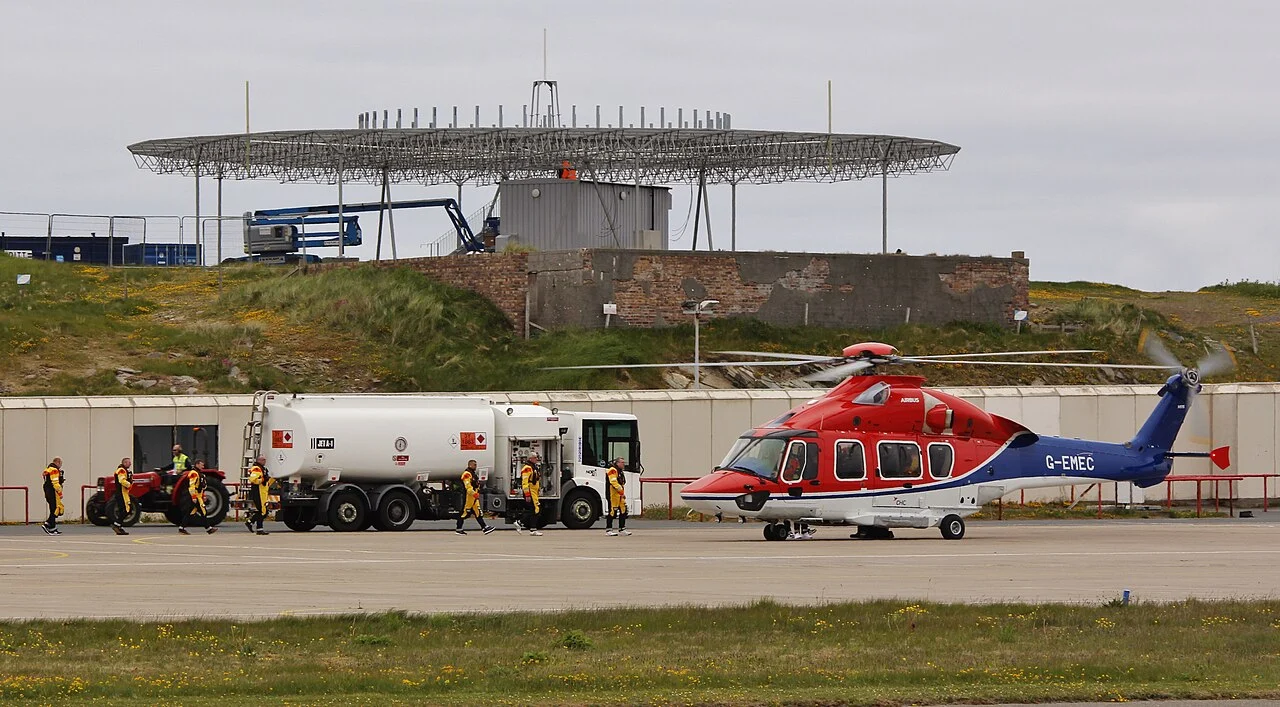
Airbus H175 (three ordered, one delivered). The H175 is a twin-engine super-medium helicopter powered by two Pratt & Whitney Canada PT6C-67E engines, with a maximum take-off weight of 7,800 kg and a manufacturer-published standard-fuel range of 1,160 km at a cruise speed of 267 km/h, according to Airbus’s published technical data. It can carry up to 18 passengers in a high-density layout or fewer in VIP or utility configuration. Ghana’s three H175s are intended for troop and logistics transport, maritime patrol and medical evacuation, per Parliament’s Defence and Interior Committee briefing. Delivery status: contracted, with one delivered (operational pending GAF acceptance into service).
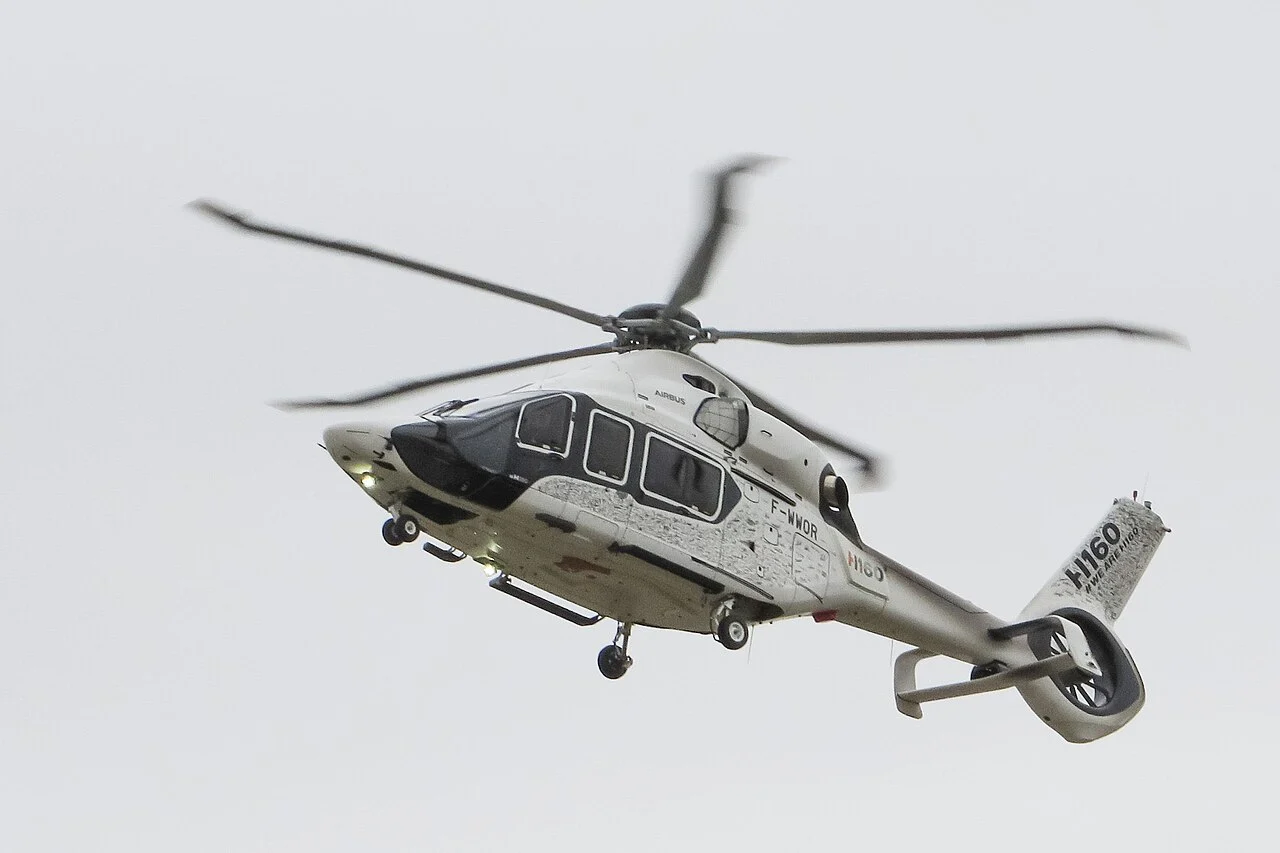
Airbus H160 (one ordered). The H160 is a lighter twin-engine helicopter powered by two Safran Arrano 1A engines, with a maximum take-off weight of 6,050 kg and a manufacturer-published standard-fuel range of 880 km at a recommended cruise speed of 255 km/h, according to Airbus. It seats up to 12 passengers plus crew. Ghana’s single example is expected to support executive transport and lighter utility missions alongside the larger H175s. Delivery status: contracted, not yet delivered.

Dassault Falcon 6X (one ordered). The Falcon 6X is a twin-engine long-range business jet powered by two Pratt & Whitney Canada PW812D engines, with a manufacturer-published maximum range of 10,186 km (5,500 nautical miles) at a top speed of Mach 0.90, and seating for up to 16 passengers, according to Dassault Aviation. It is intended to replace the GAF’s older Falcon 900EX for executive and long-range government transport. Delivery status: contracted, not yet delivered.
Timeline
| Date | Event | Status | Source |
|---|---|---|---|
| 6 Aug 2025 | GAF Z-9 helicopter crashes near Obuasi, killing eight including the Defence and Environment ministers | — | Arab News, 2025 |
| Nov 2025 | Government proposes helicopter and jet purchase to Parliament; MP Dominic Nitiwul questions the timing | reportedly under negotiation | Citi Newsroom, 2025 |
| 3 Dec 2025 | Defence and Interior Committee approves Airbus Helicopters and Dassault Aviation contract agreements | contracted | Graphic Online, 2025 |
| 5 Dec 2025 | Contract values reported: €125.97m (helicopters), $60.68m (jet) | contracted | Rainbow Radio, 2025 |
| Dec 2025 | First financing instalment of €62.5 million paid to Airbus Helicopters | contracted | Graphic Online, 2025 |
| 5 Mar 2026 | First Airbus H175 delivered, arrives Accra after ferry flight via Spain and West Africa | delivered | Ghana News Agency, 2026; Ghana Air Force, 2026 |
| May 2026 – Dec 2028 | Remaining financing instalments due; remaining aircraft scheduled for delivery within four years of approval | contracted | Graphic Online, 2025; Rainbow Radio, 2025 |
Delivered vs pending
Delivered: one Airbus H175 (5 March 2026).
Pending (contracted, not yet delivered): one Airbus H160, two Airbus H175, one Dassault Falcon 6X. Public statements say the remaining aircraft are due within four years of the December 2025 approval, meaning final delivery by roughly December 2029, but no individual delivery dates for the outstanding airframes have been officially disclosed as of October 2026.
Industrial participation and offsets
No local-assembly, technology-transfer or industrial-offset component has been disclosed in the published contract summaries or parliamentary briefings for either agreement. Both deals are structured as direct government-to-manufacturer commercial sales, financed from Ghana’s own budget and paid to Airbus Helicopters SAS and Dassault Aviation in France. Parliament’s committee reporting, as carried by Graphic Online and Rainbow Radio, describes financing terms and lifecycle-cost projections but does not mention maintenance localisation, training pipelines beyond standard type conversion, or any Ghanaian industrial-participation clause. DefenceMENA could not independently verify whether such terms exist outside the public record.
Alternatives considered
No competitive tender process has been disclosed in the public record. Both contracts were negotiated directly with incumbent suppliers: Dassault Aviation, whose earlier Falcon 900EX the new Falcon 6X will replace within the same manufacturer family, and Airbus Helicopters, continuing a relationship with a Western manufacturer distinct from the Chinese (Harbin Z-9EH) and Russian (Mi-17/171) types already in GAF service. Parliamentary records reviewed for this tracker do not mention a formal evaluation of rival types, such as the Leonardo AW139 or Bell 412 in the medium-helicopter class, or the Gulfstream G650 and Bombardier Global 6500 in the long-range business-jet class, several of which are operated by other West African state fleets.
Why it matters for Africa
Ghana’s purchase is a modest package by regional standards, but it illustrates a recurring African procurement pattern: a government financing a fleet renewal entirely from its own budget, in instalments, rather than through donor financing, export credit or an industrial-offset arrangement. The affordability constraint is explicit in Ghana’s case, with the Ministry of Defence’s 2025 budget allocation of roughly $519 million already stretched across personnel costs and operations, according to reporting cited by Ghana’s defence press. The programme also reflects a broader sustainment problem common to several African air forces: a shrinking pool of airworthy aircraft from a mixed Chinese, Russian and Western inventory, where maintenance cost and spares availability, not just unit price, increasingly drive replacement decisions. How Ghana phases delivery and funding of the remaining three aircraft through 2028 will be a useful marker for whether West African states can sustain multi-year, fully self-financed fleet-renewal programmes without falling back on donor support or deferred maintenance of the oldest airframes, a constraint also visible in coastal West African navies’ patrol-vessel procurement.
Sources
- Graphic Online: “4 helicopters and presidential jet contract agreements approved by Parliament”
- Rainbow Radio: “Parliament approves $60m jet and €125m helicopter deal for Ghana Air Force”
- Citi Newsroom: “Apologise to Ghanaians and justify need for new aircraft – Nitiwul to govt”
- Ghana News Agency: “Ghana Air Force receives Airbus helicopter”
- Ghana Air Force: “Ghana Air Force receives first Airbus H175 helicopter”
- Arab News: “Helicopter crash in Ghana kills ministers of defense and environment and 6 others”
- Airbus: H175 technical information
- Airbus: H160 technical information