Sudan’s army says its air defences shot down a “hostile strategic drone” over the Dindiro area of Blue Nile State on Friday 13 November 2026, after the aircraft crossed the border from Ethiopia. The General Command of the Sudanese Armed Forces (SAF) gave no drone type, operator, target or wreckage images. Ethiopia had not commented on the claim by the time of publication.
It is at least the second time this month that the SAF has reported downing a drone it says came from Ethiopian territory over Blue Nile. The first claim came on 3 November, a day after Sudan filed complaints against Ethiopia at the UN Security Council and the African Union over drone attacks it says are launched from Ethiopian soil (our report).
What the army said
In a short press circular dated 13 November and posted on the official account of the SAF spokesperson’s office, the army said “our air defences were able, at midday today, to shoot down a hostile strategic drone in the (Dindiro) area of Blue Nile State that crossed the border from Ethiopia.” The statement ended there. It did not say whether the drone was armed, what it was flying toward or who controlled it.
Sudan Tribune’s Arabic service and CGTN Europe carried the statement within minutes. Pro-army commentators on X described the aircraft as a medium-altitude long-endurance (MALE) drone, but the army itself did not say so, and no photos of debris had been published by the army as of 16:00 Istanbul time (13:00 UTC).
Why Dindiro matters
Dindiro sits on the road between the Kurmuk border area and Ed Damazin, the state capital. The front has moved toward it this month. On 3 November, the Rapid Support Forces (RSF) and their ally, the SPLM-N faction led by Abdelaziz al-Hilu, captured the army’s Sali base. Sudan Independent places Sali about 30 km south of Dindiro and about 100 km south of Ed Damazin. The army has not publicly explained the loss of Sali.
Drone strikes have hit people fleeing the fighting. Kurmuk Locality Commissioner Abdel Ati Mohamed al-Faki said on 10 November that RSF drones killed nine civilians from Bani Shako village who were heading north toward Ed Damazin. The RSF did not comment. The UN’s humanitarian office (OCHA) has said more than 3,000 families have left Ed Damazin and nearby areas in recent days, most of them for neighbouring Sennar State.
Sudan’s case against Ethiopia, and Ethiopia’s denial
Khartoum’s accusation is not new. A report by the army-led Transitional Sovereignty Council, released on 1 November, said 70 attacks involving 187 one-way attack drones were launched from Ethiopian territory between 15 February and 27 October. It named Asosa airport, the Kurmuk–Gizen border area and Bahir Dar air base as launch sites, and said the attacks killed or wounded 484 civilians and killed 176 soldiers (our earlier report on Sudan’s figures). These figures come from the Sudanese government and have not been independently verified.
Ethiopia denies supporting the RSF or allowing drones to be launched from its soil, and says it respects Sudan’s sovereignty. Addis Ababa in turn accuses the Sudanese army of backing rebels linked to the Tigray People’s Liberation Front, which Khartoum denies. The dispute has already led both countries to close each other’s border consulates, in Assosa and Gedaref, in early November.
Some accounts on X, including Ethiopian opposition voices, have also claimed in recent days that RSF units are gathering inside Ethiopia’s Amhara region. Defence Mena has not been able to verify those claims, and no government or independent source has confirmed them.
What remains unconfirmed
- The drone’s origin: only the SAF says it crossed from Ethiopia. No radar data, flight track or wreckage has been made public.
- The type and operator: “strategic” is the army’s word; it did not name a model or say who flew it.
- Damage or casualties: the army reported none, and no local reports of a strike in Dindiro on 13 November had appeared at the time of writing.
For background on how drones have reshaped the war, see our analysis of Sudan’s widening drone war, Egypt’s position under its defence pact with Sudan, and our overview of Sudan’s military strength. We will update this article if Ethiopia responds or the army releases more details.
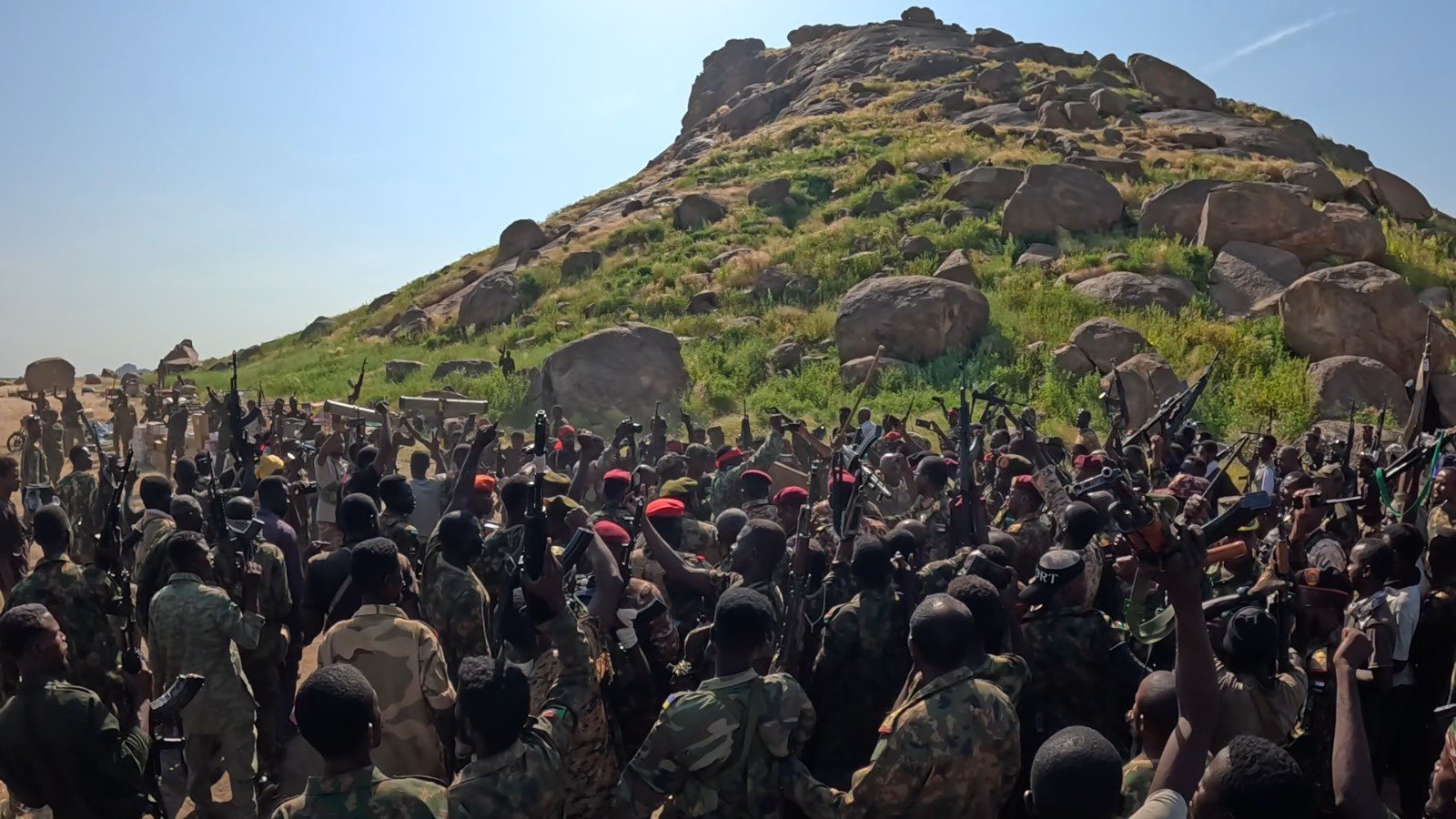
Image: Sudanese Armed Forces soldiers in Jebel Moya, October 2024 (file photo; not from the Dindiro incident). Photo: unknown author, CC0, via Wikimedia Commons.
Sources
- Sudanese Armed Forces General Command, press circular, 13 November 2026: official SAF spokesperson account on X
- Same-day reports of the statement: Sudan Tribune (Arabic), CGTN Europe
- 3 November shoot-down claim: Anadolu Agency, Al-Monitor
- Sudan’s UN and AU complaints and Sovereignty Council report: Al Jazeera, Arab News (AFP), Anadolu Agency
- Fall of Sali and the Blue Nile front: Sudan Independent
- Bani Shako drone strike and displacement: Radio Tamazuj, Sudan Tribune, Anadolu Agency