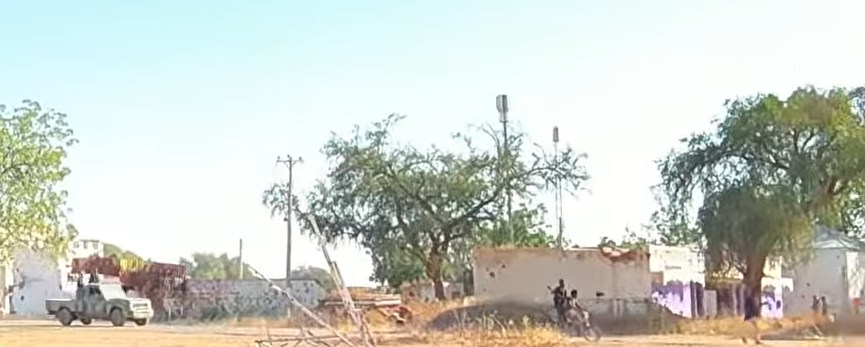
Sudan’s two warring sides have stepped up their drone campaigns against each other since October. The Rapid Support Forces (RSF) are hitting fuel and power infrastructure in army-held Sudan, while the Sudanese Armed Forces (SAF) are striking markets and supply hubs in RSF-held areas. That is the assessment of the Critical Threats Project (CTP) at the American Enterprise Institute in its 5 November Africa File, which it summarised on X on 9 November. CTP says both campaigns have raised the civilian toll and strained the Sudanese government’s relations with Ethiopia and South Sudan.
The RSF campaign against energy infrastructure
According to CTP, the RSF began a large-scale campaign against fuel facilities and power stations on 22 October with reported strikes on fuel depots in al-Rahad, about 80 km southeast of El Obeid. CTP says it has since recorded 21 sets of RSF strikes on fuel or power sites, including in or around Ad Damazin, Wad Madani, Rabak, Sinja, Omdurman and Khartoum. In CTP’s assessment, the aim is to disrupt army supply lines and undermine the government’s ability to restore services.
The Soufan Center reported that at least 15 substations had been hit by drones since early October, citing the Sudanese rights group Emergency Lawyers. It said the Merowe Dam now supplies more than 70 per cent of Sudan’s electricity, according to an employee of the state electricity company. The RSF has not publicly claimed the latest strikes on the grid, according to the Soufan Center.
The SAF campaign in RSF-held areas
CTP says the army has intensified strikes on commercial centres, residential areas and busy routes in west-central and western Sudan to target RSF leaders and supply hubs. It has recorded 10 sets of SAF strikes on markets and commercial areas since mid-October, including in Ad Daein, El Fasher and Nyala. Citing ACLED data, CTP says SAF drone strikes caused more deaths in October than in the previous three months combined.
The deadliest single strike hit the Amiet market in the disputed Abyei area on 19 October. A senior Sudanese military officer told the BBC and the Associated Press that the army had targeted fuel tankers believed to be supplying the RSF and did not target civilians, Sudans Post reported. Abyei authorities put the death toll at 220. DefenceMENA reported on the strike at the time. CTP also cites strikes on Nyala markets on 16 and 26 October. In the 26 October strike, Doctors Without Borders and Sudanese sources confirmed at least a dozen civilian deaths in a total that Emergency Lawyers and the SAF put at more than 100.
UN Secretary-General António Guterres “strongly condemns the escalating drone attacks in Sudan by the parties to the conflict”, his spokesman said, according to Al Jazeera.
Ethiopia: complaints at the UN and closed consulates
On 1 November, Sudan’s Foreign Ministry filed complaints with the UN Security Council and the African Union Peace and Security Council. It accused Ethiopia of allowing the RSF to launch drone attacks from its territory, Al Jazeera reported. A report by the army-led Transitional Sovereignty Council alleged 70 attacks using 187 one-way attack drones between 15 February and 27 October, launched from Asosa Airport, the Kurmuk-Gizen border area and Bahir Dar airbase. The report said they killed or wounded 484 civilians and killed 176 soldiers. These are allegations by the Sudanese government. Ethiopia has rejected accusations that it supports the RSF and has accused Khartoum of backing armed groups linked to the Tigray People’s Liberation Front (TPLF), a charge Khartoum denies.
According to CTP, Ethiopia ordered the closure of Sudan’s consulate in Asosa on 4 November, and Sudan reportedly responded by closing Ethiopia’s consulate in Gedaref. DefenceMENA covered Sudan’s drone allegations and the consulate closures as they happened. CTP assesses that Ethiopia has served as a supply hub and rear base for the RSF since late 2025, and links this to Sudan’s ties with the TPLF. That is CTP’s assessment, and Addis Ababa disputes it. CTP also cites open-source analyst Rich Tedd, who has tracked Emirati-linked flights to Ethiopia. The UAE has repeatedly denied supporting the RSF.
South Sudan: Abyei and a balancing act
South Sudan’s Foreign Ministry summoned Sudan’s ambassador over the Abyei strike. President Salva Kiir’s office said on 21 October that “Abyei must not become a theatre for the conflict in Sudan” and called for an investigation, Sudans Post reported. CTP describes Juba as balancing between the two sides. It notes reports that the RSF uses supply lines through South Sudan, and that Juba has overseen a revenue-sharing arrangement between the RSF and the SAF for the Heglig oil facilities.
Libya routes: satellite imagery claim
A separate open-source report points to the RSF’s supply lines. Eekad, an Arabic-language open-source investigations outlet, said on 9 November that satellite imagery appears to show concentrations of trucks and heavy vehicle tracks on routes in southern Libya leading towards Chad and Sudan. It said the site is one it had previously linked to RSF supply routes, and suggested deliveries may increase as fighting intensifies. This is an OSINT claim. DefenceMENA has not independently verified the imagery, and there has been no official confirmation from Libyan, Chadian or Sudanese authorities.
Analysis
Both sides are using drones to reach places their ground forces cannot. The RSF is attacking the electricity and fuel the government needs to run army-held cities. The SAF is attacking the markets and transit hubs that sustain RSF logistics in the west. Both campaigns land on civilians, and the UN describes both as violations of international humanitarian law. The fighting is also spreading across borders. Launch sites, fuel convoys and supply routes in neighbouring states have turned Sudan’s drone war into a diplomatic problem for Ethiopia, South Sudan and, if the Libya route claims hold, the wider region. The army’s current push in Kordofan, including the drone shoot-downs it reports near El-Khwei, shows air defence becoming as important as ground gains.
What is not known
- Independent confirmation of where the drones striking army-held Sudan are launched from.
- Verified civilian death tolls for several of the strikes, which differ widely between sources.
- Whether the vehicle activity Eekad describes in southern Libya is linked to RSF supply.
Sources
- Critical Threats Project (AEI), “Russia-Africa Summit; Sudan’s Drone War Intensifies: Africa File, November 5, 2026” (analysis): criticalthreats.org
- Critical Threats Project, Ethiopia War Security Review, 6 November 2026: criticalthreats.org
- @criticalthreats, X thread, 9 November 2026: x.com
- Al Jazeera / AFP, Sudan’s complaints against Ethiopia, 2 November 2026: aljazeera.com
- Sudans Post, Kiir condemns Abyei strike, 21 October 2026: sudanspost.com
- The Soufan Center, IntelBrief, 4 November 2026: thesoufancenter.org
- ACLED, expert comment on RSF drone bases in Ethiopia: acleddata.com
- Eekad (@EekadFacts), X post with satellite imagery video, 9 November 2026 (OSINT claim): x.com
Method: figures on strike counts are CTP’s own tallies. Sudanese government figures are allegations. Ethiopia’s and the UAE’s denials are noted. The Eekad imagery has not been independently verified.