What the Mecca Defence Pact Says: Inside the 16-Article Text Türkiye Sent to Parliament



Türkiye’s government sent the Mecca Joint Defence Agreement with Saudi Arabia and Pakistan to the Turkish parliament for ratification on Tuesday 20 October 2026. The 16-article text, published in an unofficial English translation by Middle East Eye, says an external armed attack on one party “shall be considered an attack against all”. It also leaves each country to decide how much help to give, “within the limits of their available resources”. Here is what the treaty actually commits the three countries to, and what it leaves open.
Image: DefenceMENA briefing cover (abstract graphic, not a photograph of the signing or of any forces).
Where the ratification stands
The bill was submitted to the Speaker’s office of the Grand National Assembly of Türkiye (TBMM) and will go first to parliament’s Foreign Affairs Committee, BBC Türkçe reported. Under Türkiye’s constitution, an international agreement of this kind has to be approved by the full General Assembly before it can take effect.
President Recep Tayyip Erdoğan, Pakistani Prime Minister Shehbaz Sharif and Saudi Crown Prince and Prime Minister Mohammed bin Salman signed the agreement in Mecca on 7 August 2026. On 5 October the three governments met in Riyadh and agreed to move to “practical implementation” of their collective-defence commitments after a run of Houthi attacks on the kingdom. We covered that meeting in Mecca Alliance Activated: what the Riyadh statement says.
The text itself sets the bar for entry into force. Article 16 says the treaty enters into force on the date the final instrument of ratification is deposited with the alliance secretariat. The sources reviewed for this article do not say whether Saudi Arabia or Pakistan has completed its own ratification.
The mutual-defence clause: Articles 1 and 2
Article 1 commits the parties to safeguard one another’s independence, sovereignty, territorial integrity and “internationally recognised borders”. If any of these is threatened, the parties “shall use all necessary means to eliminate such threat(s) or danger(s)”.
Article 2 is the collective-defence core, and Middle East Eye compared it to Article 5 of NATO’s founding treaty. It says:
- An “externally originating armed attack” against any party is an attack against all.
- If a party is attacked by “another country or group of countries”, the others “shall immediately assist” it.
- The parties decide the “scope and nature” of that help “following an objective assessment of the assistance required”, and cooperate “within the limits of their available resources, including military means and capabilities”.
- The help is framed as enabling the right of self-defence under Article 51 of the UN Charter.
Two points stand out. First, the clause is triggered by an attack from outside, not by internal unrest. Second, it does not oblige any party to send troops. Each government keeps the decision on what kind of help to give and how much. That is close to how NATO’s Article 5 works, which also leaves each ally to take “such action as it deems necessary”.
Article 2 refers to attacks by “another country or group of countries”. The Houthis, whose attacks prompted the October activation, are not a recognised state. The text does not say how the parties will treat attacks by non-state armed groups, although Article 1’s wider wording on threats to territorial integrity could be read to cover them.
What else the 16 articles cover
- Defence and security cooperation (Articles 3 to 5). Closer military ties, regular consultations on international security, and operational-level cooperation against terrorism.
- Training and exercises (Article 6). Personnel exchanges, joint training and exercises, and “deployments and activities” to improve interoperability, in peacetime and wartime.
- Defence industry (Article 7). Technology sharing, joint research and development, joint production, and experts from one country training personnel and supporting industry in another. All of this is “on the basis of mutual agreement”, so it creates a framework, not specific programmes.
- Institutions (Article 8). A Strategic Political and Defence Committee of foreign ministers, defence ministers and chiefs of general staff, meeting twice a year, and an optional annual leaders’ meeting. A secretariat based in Saudi Arabia, led by a secretary-general on a three-year rotating term. The first must be a Pakistani citizen; the committee named retired Lieutenant General Nauman Mahmood to the post on 5 October.
- Intelligence (Article 9). Intelligence sharing through agreed secure channels.
- Logistics (Article 10). Mutual logistical support in peace, war and emergencies, including weapons, ammunition, fuel and spare parts, “subject to the availability and compatibility” of the support.
- Legal clauses (Articles 11 to 15). The agreement does not affect obligations under earlier international agreements. It protects classified information, which may not be shared outside the parties. Disputes are settled by consultation, and amendments need the unanimous agreement of the three “core parties”.
- Duration (Article 16). No end date. A party can withdraw only after ten years in force, with at least three months’ written notice.
The agreement was signed in Turkish, Arabic and English, and the English text prevails if the versions differ.
What the text does not say
Several things that are often assumed about the pact are absent from the text.
- No named threat. Middle East Eye noted that the agreement does not identify any country or region as a threat.
- No nuclear language. The translation makes no reference to nuclear weapons, even though Pakistan is a nuclear-armed state.
- No automatic troop commitment. Article 2 leaves the scope and nature of any support to each party.
- No geographic limit or mission. Nothing in the text names Yemen, the Red Sea or any other theatre.
- Room for new members, not a list. The repeated term “core parties” and Article 8, which lets the committee approve accession rules by consensus, mean other states could join later. No other country is named.
Turkish officials have also played down talk of offensive operations. Foreign Minister Hakan Fidan said on 8 October that “Türkiye will not send soldiers to another country’s territory and carry out an attack there”, BBC Türkçe reported. The Ministry of National Defence has said that options for military support under the agreement will be decided according to needs on the ground once parliamentary approval and constitutional procedures are complete.
Why the defence-industry article matters
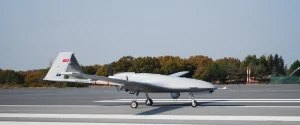
Article 7 builds on links that already exist. In July 2023 Baykar announced an export contract for Bayraktar AKINCI drones for Saudi Arabia that included local production in the kingdom. Pakistan’s Navy operates Babur-class corvettes built under a MİLGEM-design programme with Türkiye’s ASFAT, partly in Karachi. The agreement gives these programmes a treaty basis, but it does not announce any new contract, production line or value.
What to watch next
- The TBMM Foreign Affairs Committee debate and the General Assembly vote.
- Whether Riyadh and Islamabad announce their own ratifications, which the treaty needs before it formally enters into force.
- Any separate motion asking the Turkish parliament to authorise a troop deployment to Saudi Arabia. Ratifying the treaty and authorising a deployment abroad are different steps under Turkish law.
- Rules for new members from the Strategic Political and Defence Committee.
For background on the Houthi attacks behind the activation, see what Riyadh has confirmed about Houthi attacks on Saudi airports, and for Egypt’s separate move, Sisi’s request for parliamentary authority to defend Saudi Arabia.
Sources
- Middle East Eye: “Full text of the Mecca defence pact signed by Turkey, Saudi Arabia and Pakistan” (unofficial translation), 20 October 2026
- BBC News Türkçe: “Mekke İttifakı Anlaşması Meclis’e sunuldu”, 20 October 2026
- Euronews Türkçe: “Mekke Ortak Savunma Anlaşması’na ilişkin kanun teklifi TBMM’ye sunuldu”, 20 October 2026
- Al-Monitor: “Turkey sends Mecca defense pact with Saudi Arabia, Pakistan to parliament for ratification”, 20 October 2026
- Republic of Türkiye Ministry of Foreign Affairs: Joint Statement of the Makkah Alliance for Defense, 5 October 2026
- Clash Report on X: summary of the text submitted to parliament, 20 October 2026